

Technology
June 22, 2010 – Brainlab AG announced last week that it has signed an agreement with Toshiba Medical Systems Corporation Inc. to integrate its Aquilion LB Computed Tomography (CT) scanner with the Brainlab Brainsuite iCT digitally integrated operating room (OR).
 June 22, 2010

News
June 22, 2010 – Nineteen facilities in the Mid-Atlantic region have been named Centers of Excellence in accelerated partial breast irradiation (APBI) for their use of the SAVI applicator, an advanced therapy for breast cancer as part of breast conservation therapy. The SAVI applicator can provide important advantages for women with early-stage breast cancer.
June 22, 2010 
Technology
June 22, 2010 – Riverain Medical announced this week that the U.S. Food and Drug Administration (FDA) has granted approval for the newest version of the OnGuard Chest X-ray Computer-Aided Detection (CAD) technology. OnGuard identifies solitary pulmonary nodules that may represent early-stage lung cancer on an existing chest X-ray.
June 22, 2010 Sponsored Content
Videos | Radiology Imaging
Contrast Diversification in CT Imaging Across imaging departments, supply variability and growing demand are creating ...
September 08, 2026 
News
June 22, 2010 – The Certification Commission for Health Information Technology’s (CCHIT) announced last week it selected two new, all-volunteer work group panels to develop criteria for electronic health records (EHRs) in women’s health and oncology. These are the latest domains to be added to the CCHIT's independently developed certification programs.
June 22, 2010 
News
June 22, 2010 – By combining two relatively inexpensive technologies based on sound and light waves, researchers hope to lower the rate at which women undergo breast biopsies for suspicious lesions. Results of the study on ultrasound-guided optical tomography are published in the online edition and the August print issue of Radiology.
June 22, 2010 
News
June 17, 2010 – The Swedish company Sectra has been awarded a contract to install a dedicated Breast Imaging PACS and three MicroDose Mammography units for use in the Australian Capital Territory (ACT).
June 17, 2010 Sponsored Content
Sponsored Content
Videos | Radiology Imaging
Today’s radiology teams are faced with a wide range of growing complexities such as patient and procedure variabilities ...
June 24, 2026 
News
June 17, 2010 – Breastlight successfully detects malignant tumors and picks up lesions as small as 7 mm, according to data presented this week at the European Institute of Oncology's 12th Milan Breast Cancer Conference. [1]
June 17, 2010 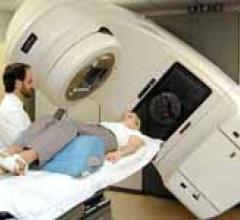
News
June 17, 2010 – A report on physician self-referral released earlier this week by the Medicare Payment Advisory Commission (MedPAC) is already receiving positive feedback from some medical professionals.
June 17, 2010 
News
June 16, 2010 – An updated ultrasound system announced this week will feature automated measurements, enhanced image quality and improved volumetric imaging. Siemens Healthcare announced the 1.5 release of its Acuson SC2000 volume imaging ultrasound system this week at the 21st Annual Scientific Session of the American Society of Echocardiography (ASE).
June 16, 2010 Sponsored Content

Feature | Information Technology
AT A GLANCE Organization: Expert Radiology Management Services, LLC Specialty: Subspecialty teleradiology — neuro and ...
May 01, 2026 
News
June 16, 2010 – New research continues to support the benefits of isotope-free electronic radiation therapy delivered directly to cancer sites with minimal exposure to surrounding healthy tissue.
June 16, 2010 
News
June 15, 2010 – A new study evaluating the safety of an echocardiography contrast agent found that the agent did not have a significant effect on patients’ pulmonary pressures.
June 15, 2010 
News
June 14, 2010 – A radio tracer is quickly gaining popularity among cardiologists in the United States.
June 14, 2010 Sponsored Content
Sponsored Content
Videos | Radiology Business
Radiology departments have many different needs and face a wide variety of challenges that can impact their departments ...
November 11, 2025 
Technology
June 14, 2010 – A new Internet, cloud-based, 3-D advanced visualization and decision support system aids physicians in endovascular case planning, The software was released this week at the Society for Vascular Surgery’s 2010 Vascular Annual Meeting in Boston.
June 14, 2010 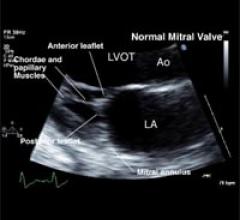
Technology
June 14, 2010 – Common cardiac imaging techniques, images and videos of echocardiography are available using an interactive learning and reference iPhone application. Modality Inc. released its Echocardiography Atlas application during the American Society of Echocardiography 21st Annual Scientific Sessions, June 13-15 in San Diego.
June 14, 2010 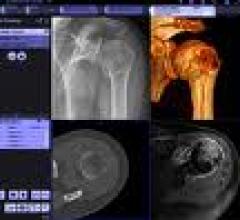
News
June 11, 2010 - Reading efficiency is gaining ground by automating case preparation and structuring case navigation across specialties.
June 11, 2010 
Technology
June 11, 2010 - Web-based advanced visualization tools are no longer limited by remote access and today provide solutions as robust as their workstation-based counterparts.
June 11, 2010 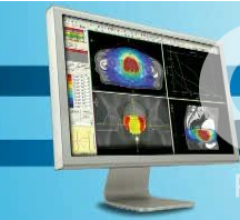
Technology
June 11, 2010 - As the adoption of volumetric modulated arc therapy (VMAT) becomes more widespread, a new upgrade to a treatment planning solution is designed to indicate where clinicians can improve their VMAT plans.
June 11, 2010 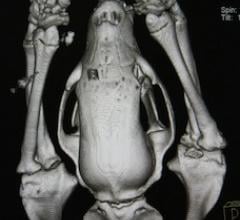
News
June 11, 2010 - Yona, the Museum of Life and Science’s yearling black bear, received a computed tomography (CT) scan June 8 to determine what’s causing her angular limb deformity.
June 10, 2010 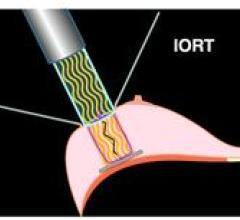
News
June 9, 2010 - A single radiation dose during intraoperative radiotherapy (IORT) is at least as effective as longer post-operative treatments, according to results from a study presented at the American Society of Clinical Oncology (ASCO) meeting, held June 4-8 in Chicago and published in the Lancet June 5.
June 09, 2010 News
June 2010 - The American College of Radiology (ACR) has launched the American Institute for Radiologic Pathology (AIRP), which will provide a four-week Radiologic-Pathology Correlation Course, given five times per year, beginning in January 2011.
June 09, 2010 © Copyright Wainscot Media. All Rights Reserved.

Subscribe Now