

News
July 19, 2011 – Scientists have found a 20 percent reduction in deaths from lung cancer among current or former heavy smokers who were screened with low-dose helical computed tomography (CT) versus those screened by chest X-ray. The primary research results from the National Lung Screening Trial (NLST) were published online in the New England Journal of Medicine.
 July 19, 2011
News
July 19, 2011 – Advancements in the medical sciences, imaging technology and magnetic resonance (MR) clinical applications have created specialty areas in the MR profession, according to a study published in the July/August 2011 issue of Radiologic Technology, a journal of the American Society of Radiologic Technologists.
July 19, 2011 
News
July 19, 2011 – Radiation oncology experts at The Ohio State University Comprehensive Cancer Center-Arthur G. James Cancer Hospital and Richard J. Solove Research Institute (OSUCCC-James) are providing advanced radiation technology that provides faster, more precise treatment of breast tumors at the recently opened JamesCare Comprehensive Breast Center at 1145 Olentangy River Road.
July 19, 2011 Sponsored Content
Videos | Radiology Imaging
Contrast Diversification in CT Imaging Across imaging departments, supply variability and growing demand are creating ...
September 08, 2026 
News
July 19, 2011 – The study "Use of Florbetapir-PET for Imaging beta-amyloid Pathology," published in the Jan. 19, 2011, issue of the Journal of the American Medical Association, has been selected by the Alzheimer's Association as the winner of the 2011 de Leon Prize in Neuroimaging for the “Best Paper” award in human neuroimaging, in the Senior Scientist category. The award was presented Saturday, July 16, 2011, to Chris Clark, M.D., co-author of the paper and medical director at Avid Radiopharmaceuticals, a wholly owned subsidiary of Eli Lilly and Co., during the Alzheimer's Imaging Consortium (AIC), in Paris, France. The AIC was a preconference to the Alzheimer's Association International Conference 2011 (AAIC 2011), held from July 17-21, 2011.
July 19, 2011 
News
July 18, 2011 — Cardinal Health opened The Center for the Advancement of Molecular Imaging on Monday in Phoenix. The center is a new, first-of-its-kind collaboration laboratory that will expedite the development of nuclear imaging agents that treat complex diseases like cancer, heart disease and neurological disorders.
July 19, 2011 
Case Study | Philips Healthcare
CTA is one of the most complex procedures routinely performed on a CT scanner. A successful CTA exam requires synchronization of the timing of the scan with maximum vessel contrast enhancement.
July 18, 2011 Sponsored Content
Sponsored Content
Videos | Radiology Imaging
Today’s radiology teams are faced with a wide range of growing complexities such as patient and procedure variabilities ...
June 24, 2026 
Case Study | Hologic Inc.
John C. Lincoln Health Network, a Phoenix-based health system that includes two hospitals and two dozen physician practices, is setting a new standard for quality breast care. In addition to being one of Arizona’s first truly comprehensive breast centers, the John C. Lincoln Breast Health and Research Center is the first in the state – and only the second in the nation – to offer 3D breast tomosynthesis.
July 18, 2011 Feature | Helen Kuhl
Although mammography retains its place as the first-line modality for regular screening for breast cancer, breast magnetic resonance imaging (MRI) has a firm spot as a valuable complementary tool.
July 18, 2011 Feature | David Finn, Health IT Officer, Symantec
In today’s complex healthcare landscape, protecting sensitive patient information is a top priority. To that end, industry regulations are increasing and complying with HIPAA and HITECH regulations is becoming more costly, even as reimbursement rates drop.
July 18, 2011 Sponsored Content

Feature | Information Technology
AT A GLANCE Organization: Expert Radiology Management Services, LLC Specialty: Subspecialty teleradiology — neuro and ...
May 01, 2026 Feature | Roberto Aranibar, Frost & Sullivan Healt
Despite its first commercial appearance in the late 1970s, positron emission tomograpnhy (PET) did not begin gaining widespread acceptance as a viable clinical technology until the mid-1990s. This was after it gained approval for reimbursement and radiopharmaceuticals for PET became more widely available.
July 18, 2011 
Feature | Helen Kuhl
As imaging modalities developed in the past 50 years — and ancillary products and services with them — colleagues who shared an interest in specific areas began to form groups to address the needs of their particular niches. Their focus included segments such as radiation oncology, nuclear imaging, women’s health, administration and informatics.
July 18, 2011 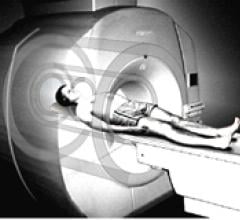
News
July 18, 2011 – Driving new technologies that will help expand the availability of MRI scanners beyond the hospital to smaller clinic settings, GE Global Research, the technology development arm for the General Electric Company, and the Mayo Clinic have received a five-year, $5.7 million grant from the National Institute of Biomedical Imaging and Bioengineering (NIBIB) and the National Institute of Neurological Disorders and Stroke (NINDS), components of the National Institutes of Health (NIH). They will jointly conduct research to understand design and application issues involved in the use of a dedicated magnetic resonance imaging (MRI) brain scanner to image for a range of neurological and psychiatric disorders such as stroke, Alzheimer’s Disease, Parkinson’s Disease, traumatic brain disorder (TBI), depression and autism.
July 18, 2011 Sponsored Content
Sponsored Content
Videos | Radiology Business
Radiology departments have many different needs and face a wide variety of challenges that can impact their departments ...
November 11, 2025 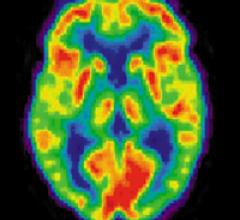
News
July 18, 2011 —Cardinal Health opened The Center for the Advancement of Molecular Imaging on Monday in Phoenix. The Center is a new, first-of-its-kind collaboration laboratory that will expedite the development of nuclear imaging agents that treat complex diseases like cancer, heart disease and neurological disorders.
July 18, 2011 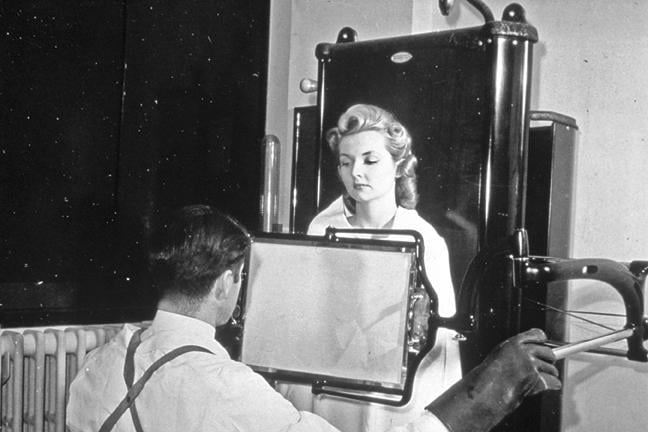
Feature
SIIM documented and archived a large amount of historical information about its organization and segments of the medical imaging industry. These include reminiscences from a founding member, Joseph N. Gitlin, DPH, FSIIM, associate professor of radiology, Johns Hopkins Medical Institutions, which provide an inside look at important milestones, as Gitlin’s career often was interwoven with developments in the industry.
July 18, 2011 Feature
July 18, 2011 – MedQuist Holdings Inc., a provider of integrated clinical documentation solutions for the United States healthcare system, announced the signing of a definitive agreement to acquire M*Modal and its advanced Speech Understanding technology for total consideration of $130 million. The transaction is subject to customary closing conditions, including review under the Hart-Scott-Rodino Act, and is expected to close prior to the end of the third quarter of 2011.
July 18, 2011 
News
July 18, 2011 – Christian Medical College & Hospital (CMC) in Ludhiana, Ind., is the site of the first Elekta Compact linear accelerator in the world to be field-upgraded to an MLCi2-equipped Elekta Compact, completing the transformation in less than a week. MLCi2 shapes treatment beams, enabling doctors to provide more accurate delivery to the target while limiting radiation exposure to surrounding structures.
July 18, 2011 
Feature | Jeanne-Marie Phillips, president, Health
A lot has happened in medical imaging during the past 50 years, and many of the vendor firms that play a leading role in the imaging industry today have witnessed and helped shape the evolution of the field to attain its place of prominence. As Imaging Technology News marks its 50th anniversary, we asked a group of industry leaders to look back and provide their perspective on the seminal events and trends during the past half-century.
July 18, 2011 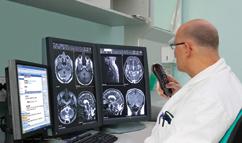
Feature | Alan Rubenstein
From my observations, one of the most challenging “best practices” is standardization. In radiology, standardization can be seen in modification to dictation and/or reporting style.
July 18, 2011 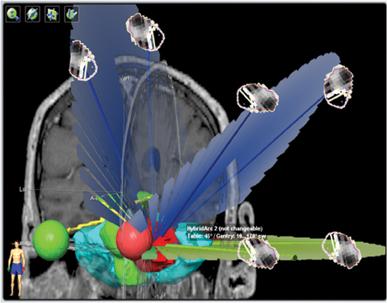
Feature | Roberto Spiegelmann, M.D.
The first applications of and even the term radiosurgery were the idea of Swedish neurosurgeon Lars Leksell, which he published in a seminar article in 1951. Leksell was looking for a minimally invasive way to destroy small tumors and vascular malformations within the skull using radiation.
July 18, 2011 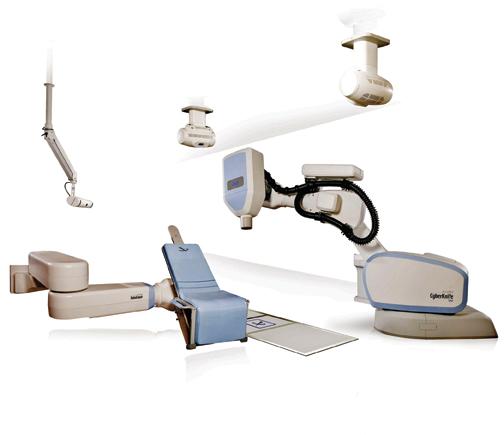
Feature | Siavash Jabbari, M.D., Advocate Lutheran
SBRT is similarly capable of delivering a large, but very precise, dose of radiation through the use of arcs or non-coplanar beams intersecting at the tumor. The accuracy allows clinicians to reduce treatment margins and maximally spare critical normal tissue (including rectum, bladder, urethra and penile bulb) from the high-dose treatment field.
July 18, 2011 © Copyright Wainscot Media. All Rights Reserved.

Subscribe Now