

News
December 9, 2011 — In a new survey of 216 radiologists, nearly 40 percent of participants cited concerns about either the lack of clarity in meaningful use (MU) guidelines or decreased efficiency from adopting current MU guidelines. The study, Radiologists' Take on Meaningful Use: a KLAS-RSNA Report, features feedback from a cross section of radiologists from across the nation; those from private practice, hospital-based practice, and academic centers are all featured.
 December 09, 2011

News
December 9, 2011 — Patients at three major medical institutions can now control the sharing of their medical images and reports with their doctors and medical providers via the RSNA Image Share network. The network was demonstrated at the annual meeting of the Radiological Society of North America (RSNA), Nov. 27-Dec. 2 in Chicago.
December 09, 2011 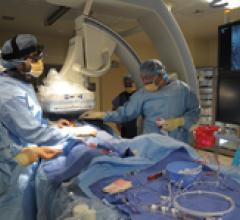
News
December 9, 2011 — The American Society of Echocardiography (ASE) and the Society of Cardiovascular Anesthesiologists (SCA) have released a new performance guideline for heightening the use of ultrasound in guided vascular cannulation. The process involves the insertion of a catheter, or tube, into a major vein or artery. The guideline also contains recommendations on training for these life-saving procedures.
December 09, 2011 Sponsored Content
Videos | Radiology Imaging
Contrast Diversification in CT Imaging Across imaging departments, supply variability and growing demand are creating ...
September 08, 2026 News
December 8, 2011 — Two new studies report that echocardiography has a central role to play in identifying patients at risk of suffering heart damage from cancer therapies. They also report the procedure can be used in evaluating potential cardio protective treatments. Both studies were presented at EUROECHO 2011, held Dec. 7-10 in Budapest, Hungary.
December 08, 2011 
News
December 8, 2011 — Speckle training echocardiography (STE) is the subject of two studies being presented at EUROECHO 2011, Dec. 7-10 in Budapest, Hungary. They compare STE, a recent echocardiography technique, with magnetic resonance imaging (MRI) in quantifying infarct size (IS) after ST-elevation myocardial infarction (STEMI). MRI is the current gold standard for IS quantification.
December 08, 2011 News
December 8, 2011 – The U.S. government has awarded McKesson its digital imaging network / picture archiving and communications system (DIN PACS III) contract, allowing the company to sell PACS and related sub-systems to all branches of the U.S. armed forces and civilian defense department agency facilities. The deal is valued at a potential $30 million through the contract term, which initially runs for two years with an additional two years of options.
December 08, 2011 Sponsored Content
Sponsored Content
Videos | Radiology Imaging
Today’s radiology teams are faced with a wide range of growing complexities such as patient and procedure variabilities ...
June 24, 2026 News
December 8, 2011 – OmniVision, a developer of advanced digital imaging solutions, announced that its ultra-compact, high-performance OV6930 CMOS image sensor performed exceptionally well in a recent 448-patient clinical study on Avantis Medical Systems' Third Eye Retroscope. The study, published in the March issue of Gastrointestinal Endoscopy, demonstrates that the Third Eye Retroscope can increase the accuracy in diagnosing adenomas, or pre-cancerous polyps, by 23.2 percent when used in conjunction with a traditional colonoscope.
December 08, 2011 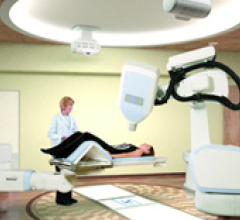
News
December 8, 2011 – Accuray, a radiation oncology, company, announced that the company received the Outstanding Innovative Improvement Award for its CyberKnife Robotic Radiosurgery System at the 3rd Annual Employer Healthcare Congress, which took place October 25 – 28, 2011 in Chicago.
December 08, 2011 
News
December 8, 2011 – Accuray, a radiation oncology, company, announced that the company received the Outstanding Innovative Improvement Award for its CyberKnife Robotic Radiosurgery System at the 3rd Annual Employer Healthcare Congress, which took place October 25 – 28, 2011 in Chicago.
December 08, 2011 Sponsored Content

Feature | Information Technology
AT A GLANCE Organization: Expert Radiology Management Services, LLC Specialty: Subspecialty teleradiology — neuro and ...
May 01, 2026 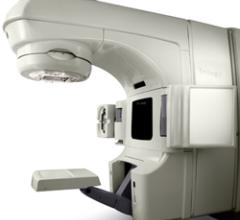
Technology
December 8, 2011 – Clinac and Trilogy medical linear accelerators from Varian Medical Systems, machines that are used to treat cancer with targeted radiotherapy, have been updated to deliver higher doses up to two times faster than was previously possible. They can now also better facilitate treating breast cancer patients on their stomachs (in the prone position) rather than their backs—an approach that can reduce the volume of lung and heart tissue exposed to radiation during treatment.
December 08, 2011 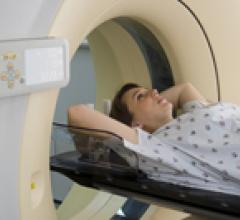
News
December 8, 2011 — A new survey released by the Siemens Radiation Reduction Alliance (SIERRA) reveals awareness and familiarity with medical imaging tests lead to clearer decisions for United States adults about their healthcare. The survey — released at RSNA 2011 — was conducted in response to increased scrutiny over medical imaging scans and the use of radiation.
December 08, 2011 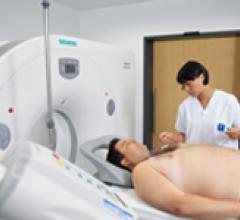
News
December 7, 2011 — At RSNA 2011, Siemens Healthcare is unveiling the Somatom Perspective. It is the first computed tomography (CT) scanner to offer the eMode software solution, which helps determine the best correlation between dose, efficiency and image quality; it can also adjust the required scan parameters automatically.
December 08, 2011 Sponsored Content
Sponsored Content
Videos | Radiology Business
Radiology departments have many different needs and face a wide variety of challenges that can impact their departments ...
November 11, 2025 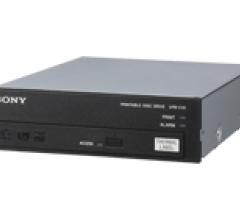
Technology
December 7, 2011 — Sony Electronics will unveil its new direct thermal printable disc drive at the Radiological Society of North America (RSNA) annual meeting, Nov. 27 – Dec. 3, 2011, in Chicago. The UPB-C 10 printable disc drive (PDD) is a DVD burner with built-in direct thermal label printer.
December 07, 2011 
Technology
December 7, 2011 — Integration of Ascension's magnetic sensors with Ultrasonix's SonixTablet and SonixGPS Positioning System is expanding point-of-care procedures to new medical frontiers. At RSNA 2011, the companies will demonstrate the capability of ultrasound-sensor guidance to expedite nerve blocks, vascular access, central line placement, core biopsies of small organs, and fine needle aspiration.
December 07, 2011 
News
December 6, 2011 – Heart Imaging Technologies (Heart IT), which pioneered the first U.S. Food and Drug Administration (FDA)-approved zero-footprint medical imaging workstation, and Johns Hopkins Medicine, announced the award of a National Institutes of Health (NIH) grant to enable the inclusion of medical images in the Nationwide Health Information Network (NHIN). The NHIN is a federal initiative of the National Office of the Coordinator for Health Information Technology.
December 06, 2011 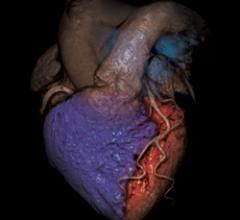
News
December 6, 2011 – Findings on coronary CT angiography (CTA), a noninvasive test to assess the coronary arteries for blockages, show different risk scenarios for men and women, according to a study presented today at the Radiological Society of North America (RSNA).
December 06, 2011 News
December 6, 2011 — Care to Care, a URAC-accredited radiology benefit management (RBM) company, was recently designated as a Preferred Vendor by the Association of Community Affiliated Plans (ACAP).
December 06, 2011 
News
December 6, 2011 — Using computed tomography (CT) imaging and advanced manufacturing techniques, a team of experts has created a reproduction of a 1704 Stradivarius violin. 3-D images of the valuable violin and details on how the replica was made were presented at the annual meeting of the Radiological Society of North America (RSNA).
December 06, 2011 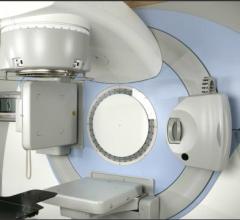
News
December 6, 2011 — The radiation oncology department at Addenbrooke's Hospital (Cambridge, United Kingdom) is upgrading its radiotherapy capabilities with Elekta therapy systems, oncology information systems (OIS) and image guided workspace. The two Elekta Synergy image guided radiation therapy (IGRT) systems replace one Siemens and one Varian linear accelerator that had been in service for more than 10 years at the medical center. The facility is run by the Cambridge University Hospitals NHS Foundation Trust.
December 06, 2011 
Feature | Dave Fornell
After spending a week walking the show floor and meeting with scores of vendors at the Radiological Society of North America (RSNA) 2011 annual meeting, the following are my choices for the most innovative new technologies presented.
December 06, 2011 © Copyright Wainscot Media. All Rights Reserved.

Subscribe Now