

Technology
DR Systems’ Unity Women’s Health Imaging provides a comprehensive solution for breast centers, supporting faster, more accurate, cost-effective breast cancer detection.
 December 14, 2010

News
December 14, 2010 – Carestream Health has selected Matrox Xenia Series controller boards to drive a variety of the company’s picture archive and communication system (PACS) and mammography products. The Xenia and Xenia Pro deliver smooth, reliable image quality plus triple high-resolution monitor support from a single PCI Express slot.
December 14, 2010 Sponsored Content
Sponsored Content
Videos | Radiology Business
Radiology departments have many different needs and face a wide variety of challenges that can impact their departments ...
November 11, 2025 
News
December 14, 2010 — A new line of compact computed radiography (CR) scanners, introduced at RSNA 2010, can be easily updated. The FireCR medical scanners can be quickly upgraded to higher speeds with a simple smart card update, giving users flexibility to start with an entry?level scanner and increase productivity as their needs change.
December 13, 2010 News
December 14, 2010 — In response to the growing global demand for medical informatics systems, combined with the company’s continued expansion of its Synapse software and modality solutions product lines, Fujifilm Medical Systems U.S.A. announced a new global division, along with a realignment of U.S. medical business operations.
December 13, 2010 
News
December 13, 2010 — An exclusive partnership agreement has been established between Hologic Inc. and SuperSonic Imagine S.A. Under the terms of the agreement, Hologic will sell, install and service SuperSonic Imagine’s Aixplorer ultrasound technology platform to the breast care community in the United States.
December 13, 2010 Sponsored Content
Feature | Breast Imaging
Despite decades of progress in breast imaging, one challenge continues to test even the most skilled radiologists ...
October 24, 2025 
News
December 13, 2010 – A new technology platform for computed tomography (CT) scanners can help hospital staffs perform CT examinations faster and more efficiently, as well as keep the dose as low as possible.
December 13, 2010 News
December 13, 2010 — New cloud-based technology for sharing imaging studies and reports is being used to improve clinical care at Virginia Commonwealth University Medical Center (VCUMC) in Richmond, Va.
December 13, 2010 
Feature | Dave Fornell
There have only been incremental improvements in intravascular ultrasound (IVUS) over the past decade. However, three new technologies introduced in 2010, and a few more expected to enter trials or be commercialized in 2011, are pushing new frontiers. Characterizing Plaque
December 13, 2010 Sponsored Content
Sponsored Content
Videos | Radiology Business
Bayer Radiology’s Barbara Ruhland and Thom Kinst discuss how radiology departments can address the many different ...
October 09, 2025
Feature | Adrienne Ma, analyst, Millennium Researc
During a time when the U.S. healthcare reform is on the minds of many within the medical community, physicians and hospital administrators are continuously looking for ways to cut spending. One avenue that physicians and hospitals are exploring is to limit the use of expensive medical devices, such as drug-eluting stents (DES).
December 13, 2010 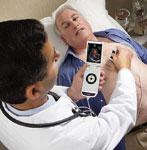
Feature | Andrew Zawadowski, M.D., FRCPC, FACC, FE
In the same fashion that the echocardiogram helped transform the cardiac exam, recent developments in the field of portable ultrasound are providing cardiologists with a new way to visualize the heart at the initial patient screening.
December 13, 2010 
Feature | Dave Fornell
Over the past few years, there have been three key areas of advancement in cardiovascular ultrasound technology – miniaturization, 3-D/4-D imaging and quantification measurements.
December 13, 2010 Sponsored Content
Case Study | PACS
eHealth Saskatchewan plays a vital role in providing IT services to patients, health care providers, and partners such ...
February 03, 2025 News
December 10, 2010 – The 5th annual list of the Top 10 Health Technology Hazards for 2011 is now available. The list, from the ECRI Institute, features the top health technology hazards that warrant critical attention by hospitals and other healthcare organizations.
December 10, 2010 News
December 10, 2010 – The first commercial production of generators using molybdenum-99 (Mo-99) produced with low-enriched uranium (LEU) targets in the United States is underway. The Lantheus TechneLite (Technetium Tc99m) generator received the first commercial scale batch from NTP Radioisotopes, a subsidiary of the Nuclear Energy Corporate of South Africa (NESCA)
December 10, 2010 
Feature | Dave Fornell
Over the past several years, the focus on new technology at the annual Radiological Society of North America (RSNA) scientific meeting in Chicago has moved away from new devices to new software. RSNA 2010, held Nov. 28 through Dec. 2, emphasized this trend.
December 08, 2010 
News
December 7, 2010 – Four distributors for a PACS and RIS system have been added in Latin America. Novarad has added Electrónica Medica (Panama), Medizintechnik (Chile), Represander (Colombia) and TAG (Guatemala) to represent its NovaPACS and NovaRIS systems in the region and support its sales team. Both systems are available in Spanish and as a Software as a Service (SaaS) offering.
December 07, 2010 News
December 7, 2010 – Positron emission tomography/computed tomography (PET/CT) could be a useful tool for predicting local recurrence in lung cancer patients treated with radiofrequency ablation (RFA). Supporting data from a study was published in the December issue of The Journal of Nuclear Medicine.
December 07, 2010 News
December 6, 2010 – A works in progress data center viewer is available on the iPad. The IMPAX Data Center Viewer, by Agfa, is powered by Xero technology and is designed to enable portable point-of-care to patient images. Clinicians can view reference images, including large multi-slice CT studies, as part of the electronic health record (EHR).
December 06, 2010 
Technology
December 6, 2010 – A new, alcohol free disinfectant wipe is safe for use on ultrasound transducers and probes, mammography compressor plates and other non-surgical surfaces. The Protex Disinfectant Wipe, by Parker Laboratories, eliminates bacteria, viruses and fungi with just one wipe.
December 06, 2010 News
December 6, 2010 – A panel of medical imaging experts discussed medical imaging appropriateness, ionizing radiation and efforts to curb overutilization, decrease radiation dose and educate patients.
December 06, 2010 © Copyright Wainscot Media. All Rights Reserved.

Subscribe Now