April 6, 2009 - More than 70 clinical information systems from 72 different technology companies and organizations are demonstrating how their products communicate and interact with each other in the Interoperability Showcase at the 2009 Annual Healthcare Information and Management Systems Society (HIMSS) Conference & Exhibition, April 4 – 8 in Chicago.
April 6, 2009 - During HIMSS 2009, Merge Healthcare (OEM division) is showcasing two software development toolkits (SDK) including version 3.9 of the MergeCOM-3 DICOM toolkit, while also unveiling its new works-in-progress MergeCOM-3 HL7 toolkit.

April 6, 2009 – Nuance Communications Inc. is previewing version 8 of its Enterprise Workstation at HIMSS 2009.

April 6, 2009 - Agfa HealthCare released TalkStation 4.0, an integrated speech recognition workflow solution for radiology reporting today.

The new software platform includes features that improve physician efficiency, enhance speech recognition, and provide tighter integration with the company's IMPAX radiology Picture Archiving and Communication Systems (PACS).

April 5, 2009 - GE Healthcare will collaborate with the Centers for Disease Control and Prevention’s (CDC) National Center for Public Health Informatics in a project demonstrating the capability of a public health agency to utilize electronic medical record (EMR) systems to provide clinicians with timely, patient-specific information at the point of care.

April 6, 2009 - SNM applauds today’s decision by the Centers for Medicare and Medicaid Services (CMS) to expand coverage of positron emission tomography (PET) scans in the initial treatment strategy of patients with cancer.

April 6, 2009 — Baylor College of Medicine (BCM) is using optical molecular imaging technology from Carestream Molecular Imaging to advance the study of diseases and therapies involving cancer, cardiovascular disease, infectious agents, inflammatory disease and other conditions.


The medical industry has historically used technology to focus primarily on advances on the clinical and disease management sides of physician practices. Additionally, the healthcare industry has traditionally lagged behind in technology investment and initiatives on the financial side in comparison to other industries.


Data capacities are doubling every month at hospitals, radiology centers and radiation oncology clinics. Traditional business applications are not sufficient to support the explosion of digital data in a multimedia environment, and providers end up spending large portions of their budgets on maintaining data.


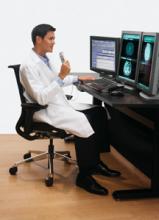
Speech recognition embedded in the radiology workstation has become a “must have” feature. According to industry experts, the most important recent advancement in the technology has been the ability to integrate speech recognition with other applications such as critical results, peer review, medical reference programs and data mining applications.


Subscribe Now