At RSNA 2011, Hologic will features its Selenia Dimensions 3-D breast tomosynthesis technology. It is designed to help clinicians in catching breast cancers earlier and in significantly reducing the number of unnecessary diagnostic work-ups.
October 7, 2011 — There is good news for cancer patients whose medical treatments put them at risk for future cardiac problems: using strain echocardiography can help physicians detect early signs of cardiac toxicity. To get this information out, the American Society of Echocardiography (ASE) is preparing a guideline document outlining the best way to evaluate cancer patients. ASE has also funded a research study to enhance identification of patients who are at risk.

October 7, 2011 — U.S. Food and Drug Administration (FDA) Commissioner Margaret A. Hamburg, M.D., released a blueprint containing immediate steps to drive biomedical innovation, while improving the health of Americans.

When it comes to medical imaging, pick any part of the body other than the female breast and the FDA pays little notice. This particular part of the anatomy gets an extraordinary amount of attention, particularly as it pertains to cancer.  Politics has a lot to do with it.

Radiologist John Feller, M.D., medical director of Desert Medical Imaging in Indian Wells, Calif., and local urologists have joined forces to test a promising new way to detect and diagnose prostate disease. When a traditional transrectal ultrasound (TRUS) biopsy proves negative for the presence of disease, yet a patient’ s prostate-specific antigen (PSA) levels continue to rise, magnetic resonance imaging’s (MRI) excellent soft-tissue imaging quality may be the answer to a difficult diagnosis.

The sign outside the Women’s Center for Radiology in Orlando, Florida, announces the arrival of 3D mammography. Susan Curry, M.D., founder and medical director, wants to get the message out to women in Central Florida about 3D mammography and the difference it can make in the early detection of breast cancer.


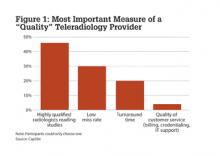
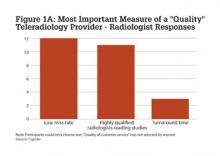
While determining how to best measure quality in a teleradiology operation is more of an art, rather than a science, I want to propose the following equation:  TQ = fn (CV + QA% + TAT + QoS). In this equation, teleradiology quality is a function of the credentials of the reader (CV), the miss rate (QA%), the turnaround time for studies (TAT) and the overall quality of service (QoS) delivered.


Subscribe Now