Eastern Idaho Regional Medical Center is announcing the installation of a linear accelerator. This technology, which exceeds any capabilities currently available in the state, will replace EIRMC's existing linear accelerator that has served over 3,000 patients since 2001.
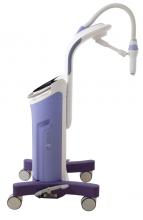
A 67-year-old male patient received his final Esteya electronic brachytherapy session to treat a squamous cell carcinoma on his right hand, Jan. 14. He was the first patient in the United States to receive Esteya treatment, which was delivered at a Los Gatos, California clinic by Rakesh Patel, M.D., medical director, The Targeted Radiation Institute. Since Patel began treatment of the patient in late December, he has added nine additional patients to the Esteya schedule.


International medical imaging IT company, Sectra and IDS announced Sectra CloudFlex, a cloud-based, comprehensive suite of breast imaging tools designed for low-volume mammography sites. 

Navidea Biopharmaceuticals Inc. announced that the U.S. Food and Drug Administration (FDA) has accepted for review an additional Supplemental New Drug Application (sNDA) for the proposed expanded label for Lymphoseek (technetium 99m tilmanocept) Injection to support broader and more flexible use in imaging and lymphatic mapping procedures, including lymphoscintigraphy and other optimization capabilities.


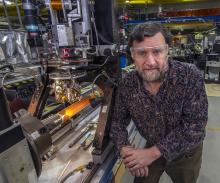
Accelerator physicists are natural-born problem solvers, finding ever more powerful ways to generate and steer particle beams for research into the mysteries of physics, materials and matter. And from the very beginning, this field born at the dawn of the atomic age has actively sought ways to apply advanced technologies to tackle more practical problems. At the top of the list—even in those early days— was taking aim at cancer.


Decompressing after RSNA 2013, I took a moment to watch “Falling Down” with Michael Douglas. I always read the credits at the end of movies, mostly for the bit players. The main characters everyone knows — the Douglases and the Duvalls. I feel like the bit characters deserve some attention. There, five down from the top and two above Mr. De Fens’ mother, was a credit that shook me — Tuesday Weld as Mrs. Prendergast. 


Regulatory and legislative changes have always resulted in sleepless nights for stakeholders in the radiology industry due to the need to understand implications, interpretations and timeline facets that influence usage, workflow, payment, adoption, procurement and, eventually, choice. Legislation involves almost everyone in the value chain from original equipment manufacturer (OEM) research and development folks, product management, marketers, OEM sales and application specialists, hospital and radiology administrators, radiologists, radiographers, biomedical engineers and even finance staff linked to a radiology department. 


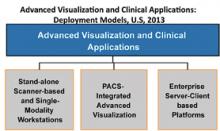
If the exhibit floor of the 99th Scientific Assembly and Annual Meeting of the Radiological Society of North America (RSNA) had one standout modality this year, it was, without question, the advances with premium computed tomography (CT). Technological and clinical advances in magnetic resonance (MR) and molecular imaging were less impressive but were no less significant. Naturally, these developments in every advanced imaging modality are turning eyes to advanced visualization (AV) and clinical applications. AV is not just a core step in the interpretation workflow of each of these modalities. More than that, it is the set of solutions that will allow the realization of the promises of these imaging advances — the ones that will “make sense” of these upgraded imaging capabilities by using innovative ways to interrogate their improved image depth and visualize their enhanced image quality.


The introduction of iPhones and iPads revolutionized the way people communicate and made transmitting large amounts of information more convenient and instantaneous. With the expansion into different types of smartphones and tablets — Android- and Windows-based — society has grown increasingly dependent on these devices to transmit and receive information, and this dependence has greatly impacted healthcare. Morris Panner, CEO of DICOM Grid, said that, “For the new generation of physicians, using mobile technology is as common for many of them as a stethoscope. They walk into medical school with one of these devices and expect to receive information on it.” 


Subscribe Now