Decompressing after RSNA 2013, I took a moment to watch “Falling Down” with Michael Douglas. I always read the credits at the end of movies, mostly for the bit players. The main characters everyone knows — the Douglases and the Duvalls. I feel like the bit characters deserve some attention. There, five down from the top and two above Mr. De Fens’ mother, was a credit that shook me — Tuesday Weld as Mrs. Prendergast. 


Regulatory and legislative changes have always resulted in sleepless nights for stakeholders in the radiology industry due to the need to understand implications, interpretations and timeline facets that influence usage, workflow, payment, adoption, procurement and, eventually, choice. Legislation involves almost everyone in the value chain from original equipment manufacturer (OEM) research and development folks, product management, marketers, OEM sales and application specialists, hospital and radiology administrators, radiologists, radiographers, biomedical engineers and even finance staff linked to a radiology department. 


If the exhibit floor of the 99th Scientific Assembly and Annual Meeting of the Radiological Society of North America (RSNA) had one standout modality this year, it was, without question, the advances with premium computed tomography (CT). Technological and clinical advances in magnetic resonance (MR) and molecular imaging were less impressive but were no less significant. Naturally, these developments in every advanced imaging modality are turning eyes to advanced visualization (AV) and clinical applications. AV is not just a core step in the interpretation workflow of each of these modalities. More than that, it is the set of solutions that will allow the realization of the promises of these imaging advances — the ones that will “make sense” of these upgraded imaging capabilities by using innovative ways to interrogate their improved image depth and visualize their enhanced image quality.


The introduction of iPhones and iPads revolutionized the way people communicate and made transmitting large amounts of information more convenient and instantaneous. With the expansion into different types of smartphones and tablets — Android- and Windows-based — society has grown increasingly dependent on these devices to transmit and receive information, and this dependence has greatly impacted healthcare. Morris Panner, CEO of DICOM Grid, said that, “For the new generation of physicians, using mobile technology is as common for many of them as a stethoscope. They walk into medical school with one of these devices and expect to receive information on it.” 


The Cancer Center at Banner Health McKee Medical Center in Loveland, Colo., boasts an array of state-of-the-art technologies and well-qualified staff, but at the core of its mission is the northern Colorado community it serves. “The community is significant, as many local funds were raised for the cancer center, which definitely makes it a community center,” said McKee Cancer Center Director Cindy McBlair, MHA, (R)(T).


Screening mammography is the key to reducing mortality from breast cancer, but women without insurance or the ability to pay do not have easy access to the life-saving exam. That’s something SouthCoast Imaging is working to change. The private imaging practice has been donating 2D mammograms to uninsured women in its community for years, and recently introduced an innovative fundraising program to make 3D mammograms available to more women. SouthCoast donates one 3D mammogram to a woman without healthcare for every 10 screening 3D mammograms they perform.  


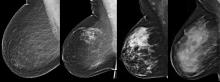
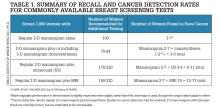
Throughout the years, imaging technologies have continued to improve for the screening and detection of cancer in the breast. While traditional mammography, ranging from film-screen to full-field digital mammography (FFDM) remains the gold standard for routine screening of women over 40 (or women over 50, per the U.S. Preventive Services Task Force guidelines that were issued in 2009), enhanced forms of mammography, as well as uses for the combination of mammography with other imaging modalities, are emerging.


Criticism and confusion notwithstanding regarding the appropriateness of X-ray mammography as the gold standard in breast screening, digital mammography will continue to provide an important cog in the wheel of breast care pathways. The United States, some may say, is a slowing market for the digital mammography imaging modality due to a gradual decrease in the number of breast imaging facilities, reduction in replacement rates of mammography units and the possible linkage of reduced procedure numbers to the 2009 U.S. Preventive Services Task Force (USPSTF) recommendations.  


Better management of X-ray radiation doses starts with recording and tracking each exposure patients receive. Dose tracking has come to the forefront of medicine in recent years with the realization that medical imaging has doubled the public’s exposure to ionizing radiation since the 1980s, largely due to the rapid expansion of computed tomography (CT) and minimally invasive angiography procedures.


Subscribe Now