The National Institutes of Health (NIH) released recommendations that provide a framework for a bold and transformative Alzheimer’s disease research agenda. Developed at the recent Alzheimer’s Disease Research Summit 2015: Path to Treatment and Prevention, the recommendations provide the wider Alzheimer’s research community with a strategy for speeding the development of effective interventions for Alzheimer’s and related dementias.

Neurosurgeons at the University of California-Los Angeles (UCLA) are using Oculus Rift virtual reality headsets used in gaming to be transported inside their patients’ brains. The UCLA Department of Neurosurgery is collaborating with Surgical Theater LLC to integrate the Oculus Rift with Surgical Theater's 3-D surgery navigation device called SNAP.


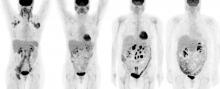
A U.K. National Cancer Research Institute trial has suggested that in patients with early stage Hodgkin lymphoma, the late effects of radiotherapy could be reduced by using a scan to determine those who actually need it. The trial was led from The University of Manchester and the Christie NHS Foundation Trust.


IBA (Ion Beam Applications S.A., EURONEXT) announced the first clinical use of its Proteus Plus Universal Beam Triggering Interface (UBTI), a new application in the administration of proton therapy. This interface can connect up to four different patient position monitoring and respiratory management systems to the IBA proton therapy system.


As the use of point-of-care (POC) ultrasound continues to expand throughout hospitals and clinics, the ECRI Institute has released a new guide to the modality for practitioners. The document explains the difference between POC and traditional ultrasound, the different types of POC ultrasound units and the numerous applications for the technology.


Pie Medical Imaging announces its new release of 3mensio Structural Heart, dedicated to planning of structural heart interventions. This new release contains an optimized Mitral workflow and a new Septal Crossing workflow for planning of mitral valve procedures to determine the appropriate access route based on computed tomography (CT) images. These new innovations will be shown at the EuroPCR in Paris, May 19- 22.


Physicians and staff working in cath labs are constantly exposed to direct X-ray beams and scatter radiation. Traditionally cath lab staff wear radiation badges to record exposure, but these only provide historical data, long after the exposures have taken place. To be meaningful and change habits to reduce exposure, some labs have adopted real-time dose recording systems, which all staff to see the doses they are receiving so they can literally take a step back to reduce their dose. 


John M. Boone, a University of California-Davis medical physicist and professor of radiology, has been awarded a $2.88 million grant from the National Cancer Institute to further develop and research computed tomography (CT) to detect breast cancer.

Subscribe Now