Photo: GE HealthCare
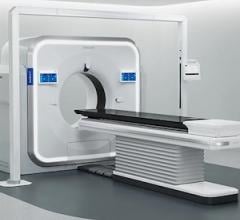
March 23, 2026 — GE HealthCare has received 510(k) clearance from the U.S. Food and Drug Administration (FDA) for Photonova Spectra,1 a photon‑counting computed tomography (PCCT) solution powered by the company’s Deep Silicon detector technology and offered as a flexible platform with multiple configurations to meet diverse clinical needs. With wide coverage and the combination of ultra-high definition (UHD) spatial and spectral imaging, Photonova Spectra helps enable fast acquisition speeds and the precise visualization of subtle tissue variations, small lesions and vascular structures.
Photon-counting CT represents a significant advancement in medical imaging. Unlike conventional CT systems – which first convert X-ray photons into visible light before measuring them – photon-counting CT directly counts individual photons and measures their energy. This enables higher spectral and spatial resolution as well as improved tissue characterization, helping provide clinicians with rich information to detect and diagnose disease.
“As clinicians across the United States face rising volumes2 and increasing diagnostic complexity3, technology must do more than capture images; it must simplify decision-making and strengthen performance across the enterprise,” says Catherine Estrampes, president & CEO, U.S. and Canada, GE HealthCare. “Photonova Spectra is designed to deliver rich clinical insights in every scan and help alleviate cognitive burden for care teams. With the U.S. 510(k) clearance, we are proud to now bring this innovation to U.S. healthcare systems and the patients they serve.”
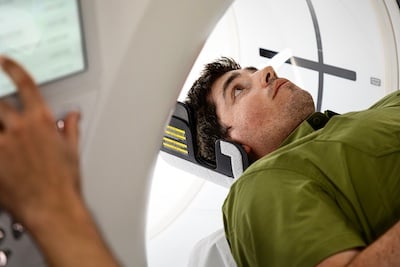
Today, Photonova Spectra stands out with the introduction of Deep Silicon, a novel detector material designed to enhance spectral imaging performance. Leveraging the purity and structural consistency of silicon – a high-performing semiconductor material – Deep Silicon enables the precise measurement of photon energy and delivers high levels of energy resolution, which are critical for advanced image reconstruction. This capability can allow clinicians to obtain spectral images with high levels of contrast, combined with detailed visualization across neurological, oncological, musculoskeletal, thoracic, and cardiac imaging.
Furthermore, Deep Silicon with 8-bin energy resolution supports advanced material separation and characterization capabilities. This enables Photonova Spectra to clearly distinguish between different materials such as iodine, calcium and fat with remarkable precision. Its wide detector coverage and rapid rotation speed (0.23 seconds) also support fast acquisition and motion-free imaging – even in challenging patient scenarios.
Photonova Spectra automatically captures both 8-bin spectral and ultra-high definition spatial data simultaneously, without special setup or multiple protocols. This design gives clinicians access to spectral information in every exam, supporting confident decision-making and treatment monitoring in complex cases across specialties.
“Elevating diagnostic confidence, particularly with subtle low-contrast structures, requires increasing clarity significantly to facilitate enhanced material differentiation,” shares Giuseppe Toia, MD, Assistant Professor of Radiology, Associate Section Chief of Abdominal Imaging and Intervention and CT Modality Chief with the Department of Radiology at the University of Wisconsin School of Medicine and Public Health. “Being involved in developing and testing the Deep Silicon detector has allowed us to see what this technology is capable of. During evaluative studies, this system allowed us to extract more clinically actionable information from a single scan to support informed decisions for research and clinical care. Because photon counting CT is a fundamentally different approach to imaging, we find it results in clean spectral signatures, high spatial resolution and accurate CT numbers.”
To process the increased data volumes produced by photon‑counting CT, Photonova Spectra incorporates NVIDIA accelerated computing technology. Designed to handle up to 50 times more data than conventional CT,4 the GPU‑powered architecture is intended to help maintain smooth, efficient workflows by leveraging NVIDIA’s high-performance computing platform and CUDA-optimized reconstruction to turn massive spectral datasets into timely, clinically actionable images.
Workflow efficiency is further supported by a one‑scan, universal full‑fidelity approach intended to reduce exam‑specific protocols and enable automated reconstruction of ultra‑high definition spectral images on demand. The CT ONE operator environment and automated features — including Auto Positioning — are designed to help improve consistency across GE HealthCare systems and simplify the overall CT process.
Altogether, Photonova Spectra’s advanced architecture offers new opportunities for research in quantitative imaging, tissue characterization, and spectral biomarker discovery. To this end, GE HealthCare is collaborating with leading healthcare institutions across the United States to explore novel clinical applications and imaging protocols previously constrained by conventional CT technology:
-
UW–Madison (Madison, Wisconsin): Represents the first U.S. clinical evaluation site of GE HealthCare’s silicon based photon-counting CT, where researchers explore continuous improvement opportunities, such as elevating image quality, reducing noise and motion artifacts, enhancing soft tissue contrast, and exploring new clinical applications across oncology, cardiology, neurology and other CT intensive specialties.
-
Stanford Medicine (Palo Alto, California): Concentrates on both human subject and technical research efforts – specifically assessing reconstruction methods, optimizing image presentation workflows, and identifying potential pathology specific advantages such as ultra-high-resolution structural visualization, improved tissue characterization, and potential new biomarkers.
“Photonova Spectra reflects years of intentional design and close collaboration with clinicians, researchers and collaborators across the globe,” adds Jean-Luc Procaccini, President & CEO, Molecular Imaging and Computed Tomography, GE HealthCare. “From the earliest stages to today, we remain focused on building a system that addresses the practical realities of clinical practice while opening pathways for scientific advancement. The result is a photon-counting platform engineered for the needs of today’s care teams, as well as the imaging challenges and research opportunities that will shape the future of CT.”
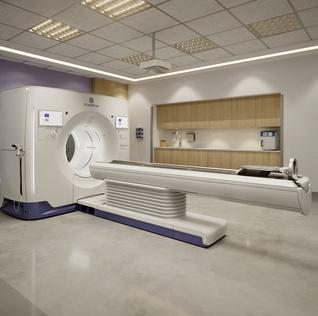
Leveraging GE HealthCare’s platform architecture, Photonova Spectra also is purposefully designed for easy install and to fit into existing GE HealthCare CT ready rooms with minimal changes, preserving the foundational mechanical, electrical, and workflow design used across the Revolution family.
With U.S. FDA 510(k) clearance now achieved, GE HealthCare will begin preparing for commercial availability in the United States.
News of Photonova Spectra’s 510(k) clearance follows GE HealthCare’s unveiling of the technology at the Radiological Society of North America (RSNA) Annual Meeting in November 2025 – demonstrating the company’s ability to move innovative technology from introduction to regulatory validation with speed and discipline.
For more information on GE HealthCare’s Photonova Spectra photon-counting CT system, visit gehealthcare.com.
-
Photonova Spectra is 510(k) cleared with the U.S. FDA. Not CE Marked. Not available for sale in Europe, Canada, or any other region.
-
Kaufman Hall. State of Hospital Volumes. Kaufman Hall, www.kaufmanhall.com/insights/infographic/state-hospital-volumes. Accessed October 6, 2025.
-
Sittig, Dean F., and Hardeep Singh. A New Socio-technical Model for Studying Health Information Technology in Complex Adaptive Healthcare Systems. In: Henriksen K, Battles JB, Keyes MA, Grady ML, editors. Advances in Patient Safety: New Directions and Alternative Approaches (Vol. 1: Assessment). Rockville (MD): Agency for Healthcare Research and Quality (US); August 2008. www.ncbi.nlm.nih.gov/books/NBK338593/. Accessed October 6, 2025.
-
When compared to Revolution Apex Elite.

 October 09, 2026