Image: Getty Images
Nov. 11, 2025 — The Society of Nuclear Medicine and Molecular Imaging (SNMMI) has released a position paper outlining the education, training and experience needed to ensure the safe and effective delivery of radiopharmaceutical therapy (RPT), a rapidly growing form of precision cancer treatment. Published in October in The Journal of Nuclear Medicine, the paper underscores SNMMI’s leadership in setting standards and guiding the global expansion of this transformative field.
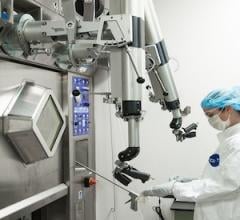
Radiopharmaceutical therapies, which use targeted radioactive compounds to treat disease, are reshaping cancer care. Pharmaceutical companies have invested billions of dollars in developing new theranostic agents and combination treatments. This growing demand is expected to create the need for hundreds of thousands of cycles of RPT, as well as hundreds of additional treatment centers and trained professionals worldwide.
Although radiopharmaceutical therapy is not new — nuclear medicine professionals have been administering it for nearly a century — recent expansion has drawn growing interest from practitioners outside the specialty. Safe and effective delivery requires specialized expertise in radiation safety, dosimetry and patient management — skills developed through years of focused education and experience. Administering these therapies without proper credentials could compromise patient safety and treatment quality.
“Radiopharmaceutical therapy represents one of the most promising frontiers in cancer care,” said the authors. “As its use grows, it’s vital that delivery remain in the hands of appropriately trained professionals to ensure safety, efficacy, and quality.”
SNMMI has been preparing for this growth by offering specialized training programs, establishing centers of excellence, providing accreditation, developing treatment protocols and offering guidance for clinical trials. The Society also offers ongoing professional development to keep physicians, technologists, radiochemists, radiopharmacists, physicists, and other team members current on evolving technologies and best practices.
The position paper emphasizes strict adherence to safety protocols (including the handling of radiopharmaceuticals), accurate dosimetry, and robust radiation safety measures, which are crucial for protecting patients and ensuring the safe and effective administration of therapies. It highlights SNMMI’s global collaborations with disease-specific and international medical societies to harmonize guidelines, share innovations, and ensure consistent, high-quality care worldwide.
“The field of nuclear medicine is poised to drive the clinical implementation and global expansion of theranostics,” the authors remarked. “Through interdisciplinary and multidisciplinary collaboration, nuclear medicine professionals can advance the field, innovate productively, and share and implement best practices worldwide.”
The authors of “Radiopharmaceutical Therapy: Rapid Growth, Rising Challenges, and the Critical Need for Expertise” include Heather A. Jacene, Brigham and Women’s Hospital/Dana-Farber Cancer Institute, Boston, Massachusetts; Jean-Luc Urbain, Theranostic Solution, Winston-Salem, North Carolina; Jason S. Lewis, Molecular Pharmacology Program and Department of Radiology, Memorial Sloan Kettering Cancer Center, New York, New York; Helen Nadel, Department of Radiology, Lucile Packard Children’s Hospital at Stanford, Stanford University School of Medicine, Stanford, California; Julie D. Bolin, GateWay Community College, Phoenix, Arizona; and Cathy S. Cutler, Isotope Research and Production Department, Brookhaven National Laboratory, Upton, New York.
Visit the JNM website for additional information and the latest research.
 October 07, 2026