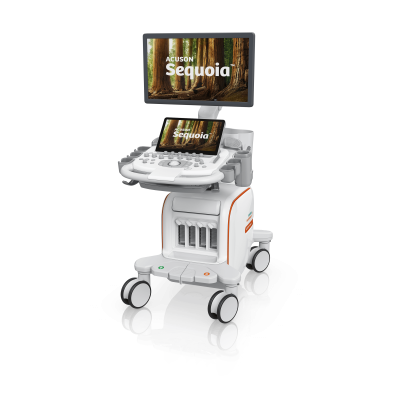
Dec. 1, 2024 — At RSNA 2024, Siemens Healthineers introduced Acuson Sequoia 3.51, a major software and hardware update to the Acuson Sequoia ultrasound system that leverages artificial intelligence (AI)2-powered features for improved workflow and efficiency to enhance clinical performance. Acuson Sequoia 3.5 features AI Abdomen with improved ergonomics, and new solutions for breast and musculoskeletal (MSK) imaging.
AI Abdomen helps reduce sonographer hand motion by up to 89% compared with manual exams and up to 44% compared with protocol exams.3 The improved ergonomics of AI Abdomen benefit the 90% of ultrasound users who have reported scanning while in pain, related to pressure applied to the transducer, abduction of the arm, and twisting of the neck and trunk.4AI Abdomen improves both examination and reading workflow through view identification and protocol standardization, with an algorithm that automatically recognizes and labels 17 anatomical views and calculates 12 key measurements.5
AI Abdomen helps standardize exams across users, with a real-time organ-identification feature and freeze-measurement of organs. The algorithm provides consistent measurements across users, enhancing diagnostic accuracy and reducing variability associated with manual measurements. With AI-based detection, labeling and measurements, the user can focus on the patient who may be experiencing significant pain or discomfort.
Acuson Sequoia 3.5 delivers a combination of technologies for breast imaging enabled by proprietary algorithms and the new HLX transducer, which is the company’s highest-frequency linear transducer. The proprietary next generation 2D Shear Wave technology adapts, to better identify and display stiff lesions in the breast, while the HLX transducer provides penetration and resolution, providing clinicians with the necessary diagnostic information to see and reduce false negatives.
“I am impressed by the advancements in the Acuson Sequoia 3.5,” said Adrian Lim, MD, professor of radiology at Imperial College London. “The anatomy recognition and measurement of AI Abdomen could significantly simplify the abdominal exam, and I was equally impressed by the image resolution, penetration, and ergonomics of the new HLX transducer.”
The HLX transducer also addresses the MSK clinician’s need to visualize large in-motion tissues and small, superficial structures for conditions such as tendon tears and inflammatory arthritis. The lightweight HLX transducer, designed with an ergonomical grip and narrow shape, allows for constant light pressure and tight access, and reduces strain and pressure during scans.
Acuson Sequoia 3.5 also includes notable liver quantification tools, Ultrasound Derived Fat Fraction and Auto Point Shear Wave Elastography. These proprietary tools provide quantification of liver tissue stiffness and hepatic steatosis in a single acquisition. The association between hepatic steatosis and fibrosis progression underscores the need to have accurate and reliable non-invasive tools to aid in the assessment of both liver fibrosis and hepatic steatosis.
Acuson Sequoia 3.5 is cleared by the Food and Drug Administration, CE marked in the European Union, and is available globally. Further information can be found here.
1. This product is not commercially available in all countries and/or all modalities. Its future availability cannot be guaranteed.
2. Software application leveraging machine learning-based Artificial Intelligence to achieve the intended outcome.
3. Many variables exist in the customer environment, including sonographer techniques, which may affect individual customer experience. Data available on request.
4. Evans K, Roll S, Baker J. Work-Related Musculoskeletal Disorders (WRMSD) Among Registered Diagnostic Medical Sonographers and Vascular Technologists.
5. Acuson Sequoia Ultrasound System - Siemens Healthineers USA
 October 19, 2026