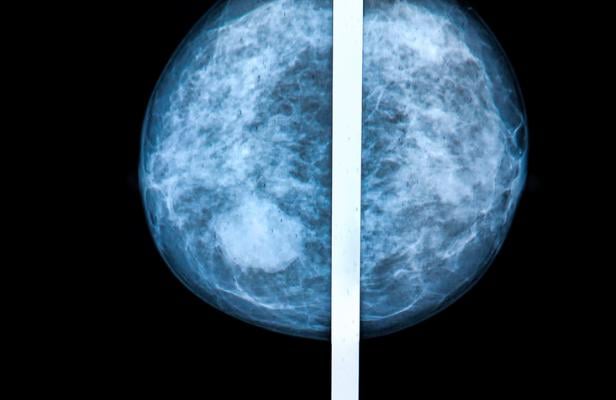
March 30, 2022 — Breast density notifications aim to educate women about the risks of high breast density, defined as having more fibroglandular tissue than fatty tissue, as visualized on a mammogram. Prompted by activists whose own breast density had obscured breast cancers on their mammograms, 38 U.S. states and Washington, DC, have enacted legislation requiring written notification of a patient’s breast density (DBN) after a mammogram and language for a federal notification is forthcoming from the U.S.A. Food and Drug Administration.
Yet, these notifications were developed with limited input and without extensive testing among women in the general population, and many are written at a high literacy level, often discordant with population literacy levels. Now a new study from Boston University School of Medicine (BUSM) has found women had varying preferences for learning about personal breast density, only partly associated with literacy level or race/ethnicity.
To explore women’s preferences with and experiences for receiving breast density information, the researchers conducted a national telephone survey of a large, diverse sample of American women and qualitative interviews with a subset of these women.
They found most women (80 percent) preferred learning of personal breast density from providers, with higher rates among Non-Hispanic Black (85 percent) than Non-Hispanic White women (80 percent); and among Non-Hispanic White than Asian women (72 percent). Women with low literacy less often preferred receiving breast density information from providers (76 percent versus 81 percent), more often preferring written notification (21 percent versus 10 percent); women with high literacy more often preferred learning through an online portal (nine percent versus three percent).
According to the researchers, these findings have implications for how health education materials regarding breast density are delivered. “Results show that the current breast density notifications may not meet the needs or preferences of all women, especially those with lower literacy or women of color.”
Kressin believes the findings support the importance of ensuring (through adequate elicitation of preferences and pre-testing with diverse audiences) that all populations receive health information in the way they desire and which will provide information to them in a way they can absorb, so as to inform future breast screening decisions.
For more information: https://www.bumc.bu.edu/
Related Breast Density Content:
AI Provides Accurate Breast Density Classification
VIDEO: The Impact of Breast Density Technology and Legislation
VIDEO: Personalized Breast Screening and Breast Density
VIDEO: Breast Cancer Awareness - Highlights of the NCoBC 2016 Conference
Fake News: Having Dense Breast Tissue is No Big Deal
The Manic World of Social Media and Breast Cancer: Gratitude and Grief
 October 09, 2026