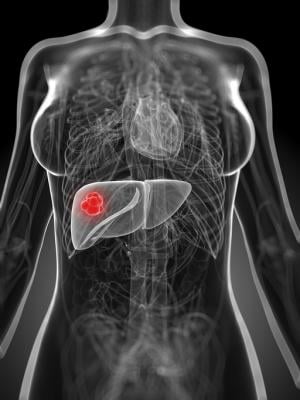
October 24, 2021 — People with liver cancer awaiting transplantation could benefit from non-invasive radiation treatments but are rarely given this therapy, according to a new analysis of U.S. national data. Findings will be presented today at the American Society for Radiation Oncology (ASTRO) Annual Meeting.
“External-beam radiation therapy is a proven, established, safe and effective treatment option for patients with unresectable liver cancer, yet its under-utilization within this population—fewer than 4% of patients—highlights a real-world gap in treatment options available for patients with hepatocellular carcinoma,” said study author Nima Nabavizadeh, M.D., associate professor of radiation oncology and residency program director at Oregon Health & Science University in Portland.
Hepatocellular carcinoma (HCC) is the sixth most common cancer worldwide and the fourth leading cause of cancer death. Roughly 90% of patients with HCC also have cirrhosis, which occurs when an underlying liver disease leads to scarring and permanent liver damage and is the strongest risk factor for liver cancer. People with unresectable HCC have tumors in their liver that cannot be safely removed with surgery, either due to severity of underlying cirrhosis or other clinical factors.
For patients with localized liver cancer and advanced cirrhosis, “liver transplantation is the best and only chance for long-term survival,” said Nabavizadeh. However, the supply of organs available for transplant is limited, and candidates often wait months or more than a year to get a new liver. In addition, if a patient's cancer spreads outside of transplantable size criteria or to another part of the body while they are waiting for a new liver, they are no longer eligible for transplant. Many patients, therefore, receive liver-directed bridging therapy, which is treatment to prevent the growth or spread of tumors during the waiting period.
Liver-directed treatment options for patients awaiting transplant include: (1) thermal ablation procedures, which use advanced imaging technology to guide probes through the skin and into the liver, to burn or freeze tumors at the site; catheter-based treatments including (2) transarterial chemoembolization (TACE) and (3) Y-90 radioembolization, where small particles are injected selectively into an artery directly supplying the tumor that cut off a tumor’s blood supply and trap chemotherapy drugs or radioactive substances within the tumor; and (4) external-beam radiation therapy (EBRT), which aims high doses of targeted radiation at tumor sites from outside the body using non-invasive techniques.
Nabavizadeh and his team analyzed data from the United Network for Organ Sharing (UNOS), a non-profit organization that operates the United States transplant system under contract with the 2/3 federal government, to see which bridging therapies were prescribed most often. Of the 18,477 patients with HCC awaiting transplant since 2013, 85.4% received some type of bridging therapy. However, just 3.6% of those patients were treated with EBRT, either alone (1.2%) or in combination with another type of therapy (2.4%).
Nabavizadeh said he expected the number to be much higher. “Using our own institutional experience, more than 4% of our patients get EBRT at some point, so 3.6% was a surprising figure to us,” he said, “especially because radiation is the only non-invasive option and has not been shown to be inferior to the other treatments.”
The analysis also found the use of EBRT has increased over the past several years but remains well below utilization for other therapies. TACE was the most utilized therapy, used for 39.6% of patients. Thermal ablation was used for 12.8% of patients, and radioembolization was used for 8.7% of patients. Nearly a quarter of patients (22.2%) received a combination of non-EBRT therapies.
Because there are no data supporting one treatment over another, said Dr. Nabavizadeh, institutional and regional practice patterns are often the key factor driving treatment decisions. Indeed, EBRT usage varied by geographic region, from a high of 8.7% of patients in the Great Lakes states (Michigan, Ohio and Indiana) receiving this type of bridging therapy to a low of 1.7% of patients in the Southeast (Florida, Georgia, Mississippi, Alabama, Louisiana, Arkansas) (p<0.001). EBRT utilization did not differ by clinical parameters such as the number of tumors, tumor diameter or bilirubin levels.
While the study did not explore why patients were prescribed one treatment over another, Nabavizadeh suggested it could be a result of which type of doctor a patient consulted. “Radiation oncologists are often left out of the management discussions for these patients,” he said. “When presented with choices, many patients want the non-invasive approach. They understand this treatment could really impact their quality of life. Radiation needs to be part of treatment discussions much more frequently than it is now.”
Find more key studies in the article Radiation Oncology Research Featured at ASTRO 2021
See photos of some of the latest technologies at ASTRO
 October 07, 2026