Getty Images
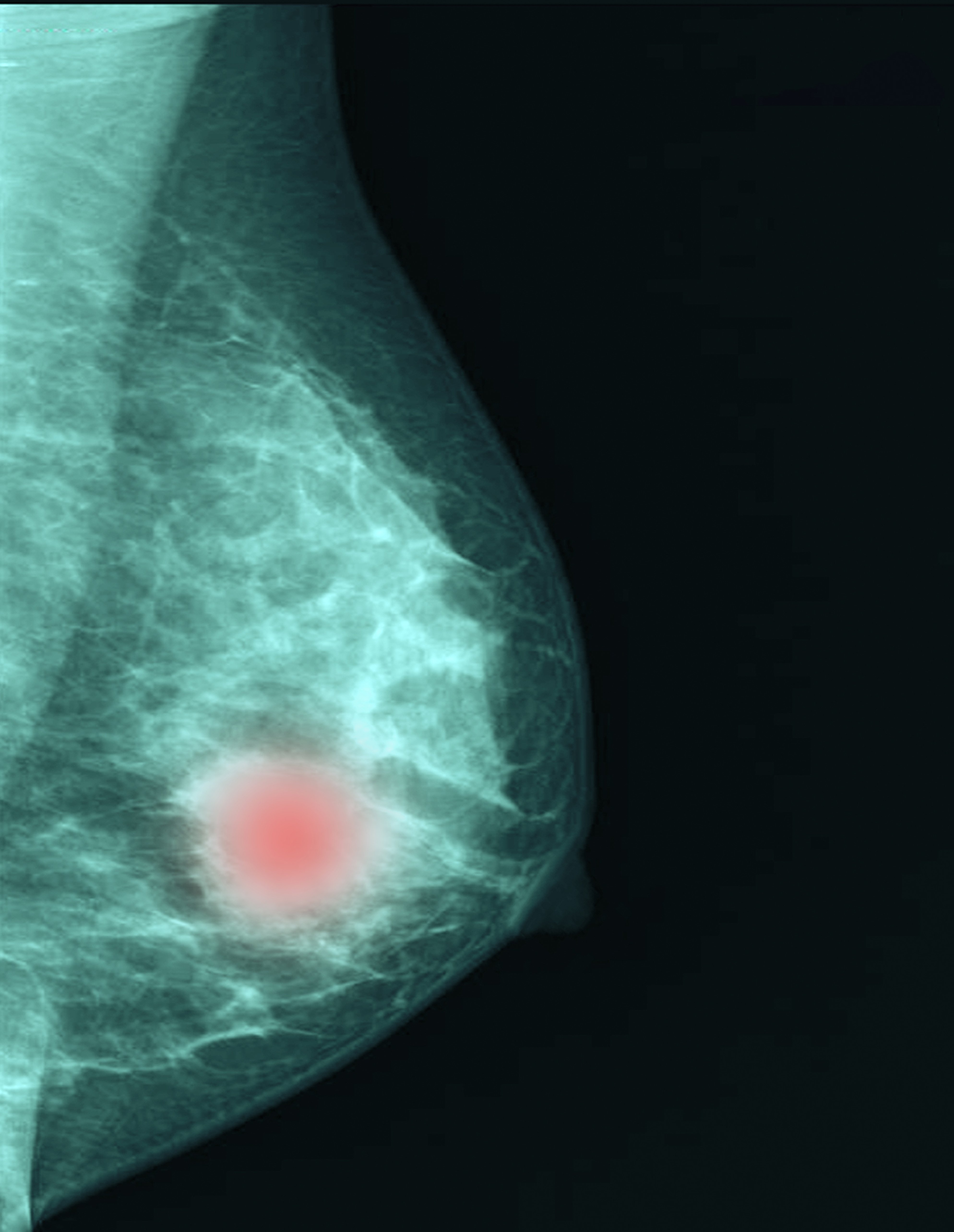
Headlines around the world the past several months declared that artificial intelligence (AI) is better at detecting breast cancer than human radiologists. Can artificial intelligence really read my own mammogram better than me? That would be intriguing, if it were true.
In fact, there are no studies to date proving that AI technology reads mammograms more accurately than radiologists in the real-world setting, but what the groundbreaking study1 in the journal Nature did show was that AI could detect breast cancer more accurately than radiologists in a selected set of mammograms, particularly when those sets of mammograms are enriched with lots of breast cancer cases.
The Promise of AI
Although there is much more research to be done, it grows clearer by the day that AI has great promise in improving breast cancer care. But as we venture out into the expanse of AI technology, it is critical we proceed with caution. Recall the headlines from March 2018 of the Uber fully autonomous car that killed a woman crossing the street in Tempe, Ariz. The car’s AI-based software was unable to identify her as a person crossing the street and struck her at around 40 MPH, according to the Associated Press. Then there was the meme that went viral on social media in 2016 depicting rows and columns of photos of Chihuahuas and blueberry muffins, which so cleverly illustrated the limitations of AI algorithms in correctly identifying some of those images so unmistakably identifiable by any human. Along those same lines, the recent article in Nature also found in its reader study that although AI was able to identify some cancers missed by the study radiologists, at least one cancer that was identified by all six radiologists was missed by the AI system.
So, where do we go from here? AI is good. Radiologists are good. But AI and radiologists are better together. I am seeing that potential firsthand as a principle investigator in an unpublished study Hoag is conducting in collaboration with Therapixel, a company that is not related to the Nature study, specializing in AI for medical imaging. The results of the study fully support this concept of augmented intelligence whereby the best results are obtained when radiologists harness the power of AI to optimize the accuracy and performance of mammographic screening for breast cancer.
AI’s Future in Mammography
Do I believe AI will become better at reading mammograms than me? I don’t know, but I sure hope so. Do I believe AI will make me obsolete? Not in my lifetime. Even if AI reaches its full potential, there are some cancers (i.e. “invisible cancers”) that it will miss simply due to the nature of mammography and other imaging techniques. Diagnosing breast cancer isn’t easy, and it certainly isn’t as simple as interpreting a mammogram. AI can’t lay hands on a person’s body or conduct a meaningful clinical interview that could reveal changes in skin, palpable lumps or discharge that turn out to be indicators of cancer. AI can’t perform breast biopsies or aspirations, and it cannot engage in a complex discussion about a woman’s individual values. Most importantly, AI cannot provide women with compassion and empathy.
I have heard AI described in medicine as analogous to the autopilot function on planes. While autopilot could potentially fly and land a plane on its own, would anyone be willing to board a plane without a human pilot? The same is true for patient care. AI will best be utilized in concert with radiologists who can shape the way it is used, develop standards and identify the technology’s limitations.
Instead of framing the story as “robot versus radiologist,” I believe patients are better served by discussing the powerful potential of putting AI and radiologists together. “AI has the potential to help radiologists improve the efficiency and effectiveness of breast cancer imaging” is not a scintillating headline. But it is a thrilling concept, and it’s one that I am excited to explore.
January Lopez, M.D., is a fellowship trained breast imaging specialist, board-certified diagnostic radiologist and Director of Breast Imaging at Hoag Breast Centers.
Reference:
1. McKinney, S.M., Sieniek, M., Godbole, V. et al. International evaluation of an AI system for breast cancer screening. Nature 577, 89–94 (2020). https://doi.org/10.1038/s41586-019-1799-6
Related Women's Health Content:
Leveraging Artificial Intelligence to Enhance the Radiologist and Patient Experience
Artificial Intelligence to Improve the Precision of Mammograms

 October 09, 2026