News | Artificial Intelligence | March 23, 2020

Instant triage capability could potentially speed up diagnosis of COVID-19 individuals and ensure resources allocated properly.

Instant triage capability could potentially speed up diagnosis of COVID-19 individuals and ensure resources allocated properly.

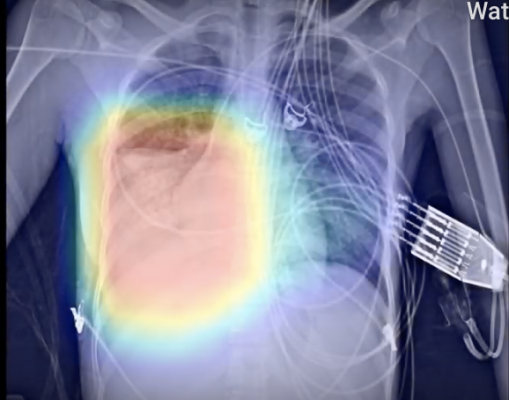
March 23, 2020 — behold.ai announced that its artificial intelligence-based red dot algorithm quickly identifies chest X-rays from COVID-19 patients as ‘abnormal’. This instant triage could potentially speed up diagnosis of COVID-19 individuals and ensure resources are allocated properly.

“The majority of deaths from COVID-19 are owing to pneumonia in the lungs of vulnerable patients. Pneumonia is a potentially life-threatening condition caused by a number of pathogens including, directly or indirectly, COVID-19 infection. Our algorithm can detect abnormal chest X-rays including pneumonia almost instantly. Out of 28 X-rays reviewed from patients with COVID-19, we correctly identified 85% of them as ‘abnormal’ using red dot,” said Tom Naunton Morgan, M.D., MB, FRCS, FRCR, Chief Medical Officer, behold.ai. “As we evaluate further positive cases from across the world, including here in the UK, our results will be further validated.  This will increase the utility of our ‘instant triage’ and potentially help reduce the burden on healthcare systems as more and more cases of pneumonia present and require rapid diagnosis.”

 The data follows recent news that behold.ai’s algorithm has been cleared by the US Food and Drug Administration (FDA). Commercial rollout in the U.S. is planned for later this year.

“Our technology can make a big difference to patient safety, and the delivery of care and cost-savings to health services. It is available here and now to help manage the increased burden that will fall on health systems like the NHS in the coming weeks,” said Simon Rasalingham, Chairman and Chief Executive, behold.ai.

For more information: www.behold.ai

Related Content

News | Radiology Imaging

Feb. 12, 2026 — Siemens Healthineers and Mayo Clinic are expanding their strategic collaboration to enhance patient care ...

Time February 13, 2026
arrow
News | Digital Pathology

Feb. 11, 2026 — Leica Biosystems has announced the global launch of the Leica CM1950 Cryostat with DualEcoTec Cooling ...

Time February 11, 2026
arrow
Feature | Cardiac Imaging | Kyle Hardner

Advances in coronary CT angiography (CCTA) have reached the point where image quality and AI capabilities are creating ...

Time February 06, 2026
arrow
News | Ultrasound Women's Health

Feb. 5, 2026 — BrightHeart, a global provider of AI-driven prenatal ultrasound, has announced the availability of its B ...

Time February 05, 2026
arrow
News | Lung Imaging

Feb. 3, 2026 — RevealDx, a leader in the characterization of lung nodules, recently announced FDA clearance of RevealAI ...

Time February 04, 2026
arrow
News | FDA

Jan. 29, 2026 — GE HealthCare has received 510(k) clearance from the U.S. Food and Drug Administration (FDA) for MIM ...

Time February 03, 2026
arrow
News | Radiology Imaging

Jan.26, 2026 — SimonMed Imaging has unveiled an updated brand and the launch of SimonMed Longevity, a new division ...

Time January 27, 2026
arrow
News | Point-of-Care Ultrasound (POCUS)

Jan. 22, 2026 — Qure.ai has received a grant from the Gates Foundation to develop a large open-source multi-modal ...

Time January 23, 2026
arrow
News | Magnetic Resonance Imaging (MRI)

Jan. 20, 2026 — Hyperfine, the developer of the first FDA-cleared AI-powered portable MRI system for the brain — the ...

Time January 20, 2026
arrow
News | Mammography

Jan. 16, 2026 — Vega Imaging Informatics has announced the successful curation of the world’s largest digital breast ...

Time January 19, 2026
arrow
Subscribe Now