News | Artificial Intelligence | March 23, 2020

Instant triage capability could potentially speed up diagnosis of COVID-19 individuals and ensure resources allocated properly.

Instant triage capability could potentially speed up diagnosis of COVID-19 individuals and ensure resources allocated properly.

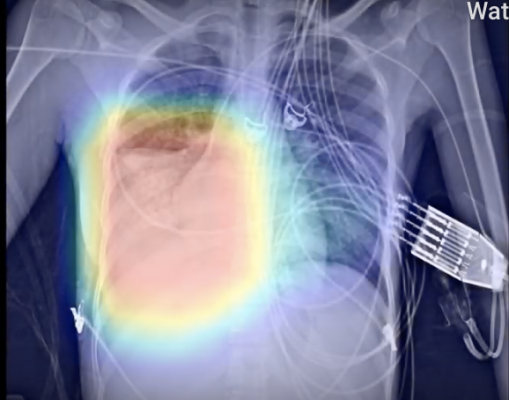
March 23, 2020 — behold.ai announced that its artificial intelligence-based red dot algorithm quickly identifies chest X-rays from COVID-19 patients as ‘abnormal’. This instant triage could potentially speed up diagnosis of COVID-19 individuals and ensure resources are allocated properly.

“The majority of deaths from COVID-19 are owing to pneumonia in the lungs of vulnerable patients. Pneumonia is a potentially life-threatening condition caused by a number of pathogens including, directly or indirectly, COVID-19 infection. Our algorithm can detect abnormal chest X-rays including pneumonia almost instantly. Out of 28 X-rays reviewed from patients with COVID-19, we correctly identified 85% of them as ‘abnormal’ using red dot,” said Tom Naunton Morgan, M.D., MB, FRCS, FRCR, Chief Medical Officer, behold.ai. “As we evaluate further positive cases from across the world, including here in the UK, our results will be further validated.  This will increase the utility of our ‘instant triage’ and potentially help reduce the burden on healthcare systems as more and more cases of pneumonia present and require rapid diagnosis.”

 The data follows recent news that behold.ai’s algorithm has been cleared by the US Food and Drug Administration (FDA). Commercial rollout in the U.S. is planned for later this year.

“Our technology can make a big difference to patient safety, and the delivery of care and cost-savings to health services. It is available here and now to help manage the increased burden that will fall on health systems like the NHS in the coming weeks,” said Simon Rasalingham, Chairman and Chief Executive, behold.ai.

For more information: www.behold.ai

Related Content

News | Point-of-Care Ultrasound (POCUS)

Jan. 22, 2026 — Qure.ai has received a grant from the Gates Foundation to develop a large open-source multi-modal ...

Time January 23, 2026
arrow
News | Magnetic Resonance Imaging (MRI)

Jan. 20, 2026 — Hyperfine, the developer of the first FDA-cleared AI-powered portable MRI system for the brain — the ...

Time January 20, 2026
arrow
News | Mammography

Jan. 16, 2026 — Vega Imaging Informatics has announced the successful curation of the world’s largest digital breast ...

Time January 19, 2026
arrow
News | Radiation Therapy

Jan. 16, 2026 — Elekta has announced that its Elekta Evo* CT-Linac has received 510(k) clearance from the U.S. Food and ...

Time January 16, 2026
arrow
Feature | Cybersecurity | Kyle Hardner

As radiology practices shift toward cloud-based platforms and integrate AI-powered tools, will practices become more ...

Time January 14, 2026
arrow
News | Stroke

Dec. 18, 2025 — Brainomix, a provider of AI-powered imaging biomarkers for stroke and lung fibrosis, has announced ...

Time December 24, 2025
arrow
News | Information Technology

Dec. 16, 2025 — McCrae Tech has launched the world’s first health AI orchestrator called Orchestral. It is a health ...

Time December 23, 2025
arrow
News | RSNA 2025

Dec. 12, 2025 — At RSNA 2025, United Imaging Intelligence (UII), the AI-focused subsidiary of United Imaging Group ...

Time December 17, 2025
arrow
News | Breast Imaging

Dec. 16, 2025 — Hologic, Inc, a medical technology company dedicated to improving women’s health, recently announced new ...

Time December 16, 2025
arrow
Feature | Radiation Oncology | Kyle Hardner

Genomics has guided personalized cancer treatments for the past two decades. Now, AI biomarkers are expanding the field ...

Time December 09, 2025
arrow
Subscribe Now