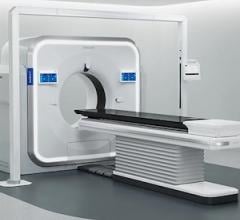
Rustain Morgan, M.D., and colleagues show racial/ethnic disparities in use of important imaging during lung cancer diagnosis. Photo courtesy of University of Colorado Cancer Center
March 12, 2020 — The use of PET-CT imaging gives doctors the best possible picture of non-small cell lung cancer (NSCLC), and this accurate imaging helps to match patients with the best treatments. Unfortunately, not every NSCLC patient gets the recommended PET-CT imaging. Now a University of Colorado Cancer Center study published in the Journal of the National Cancer Institute shows an important predictor of PET-CT use: African American patients were only about half as likely as non-Hispanic whites to receive this important imaging; Hispanics received this imaging about 70 percent as frequently as non-Hispanic whites.
"We started from the perspective of outcomes: we know that Black and Hispanic lung cancer patients tend to not do as well as non-Hispanic whites. We wondered if there could also be differences in how these groups are imaged at diagnosis," said Rustain Morgan, M.D., CU Cancer Center investigator and assistant professor in the CU School of Medicine Department of Radiology.
The study, with co-authors Sana Karam, M.D., Ph.D., and Cathy Bradley, Ph.D., looked at PET-CT use and outcomes of 28,881 non-Hispanic whites, 3,123 African Americans, and 1,907 Hispanics diagnosed with NSCLC between 2007 and 2015. To focus on potential ethnic/racial differences, the study controlled for factors including education level and socioeconomics.
"Our study showed a couple things," Morgan said. "First, it reaffirmed that patients who are imaged with PET-CT at diagnosis have better cancer-specific survival. Second, it showed there is a significant difference in who gets the recommended PET-CT at diagnosis. And third, it leads to more questions, like what is driving this difference and are these disparities in adherence to imaging guidelines present in other cancers."
In cancer treatment, more advanced cancers generally require more aggressive treatments. Some earlier imaging strategies including chest radiography may identify a primary lung tumor but may not be sensitive enough to see smaller deposits of the disease, leading doctors and patients to underestimate a cancer's stage. Misidentifying a cancer's stage can lead to under-treating the disease, and possibly to worse outcomes.
"If African Americans and Hispanics aren't getting the best imaging, this could be a piece of the puzzle explaining why these patients with lung cancer tend to have worse outcomes than white patients," Morgan said.
He points to a couple possible explanations for these disparities. First, PET-CT machines are relatively specialized and expensive, meaning that not all hospitals have the capability to offer this imaging.
"For example, our safety net hospital, Denver Health, doesn't have a PET-CT machine. It is also rare for rural hospitals to have this equipment, which means patients would have to travel several hours to have their imaging," Morgan said. In fact, in addition to racial/ethnic disparities, Morgan's study also shows differences in PET-CT use based on the type of treatment facility: Patients treated at NCI-designated cancer centers were more likely than those treated at teaching hospitals and especially those treated at community cancer centers to receive PET-CT imaging.
"Another, and potentially even more problematic factor, could be unconscious bias is a driver of the differences we found," Morgan said.
Future studies hope to answer some of these questions. For example, Morgan is working with CU Cancer Center colleagues to plan a project examining the financial cost of inappropriate cancer staging. And, of course, now that a clearer picture of these disparities is starting to emerge, Morgan and colleagues hope to explore ways to ensure that all NSCLC patients receive the recommended imaging during the process of diagnosis.
"Now that we know more about this problem, we must find ways to address it," Morgan said.
For more information: www.cuanschutz.edu

 October 08, 2026