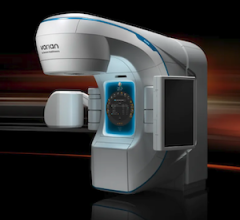
January 31, 2019 — The first report from a phase II, multi-center clinical trial indicates stereotactic radiation can extend long-term survival for some patients with stage-IV cancers while maintaining their quality of life. The study is published in the January issue of International Journal of Radiation Oncology • Biology • Physics (Red Journal).1
“Despite many advances in cancer care over the last 20 to 30 years, some patients still go on to develop metastatic or stage-IV disease. Generally speaking, radiation therapy in that setting has been used only to make the patient comfortable,” said Dwight E. Heron, M.D., MBA, FACRO, FACR, senior author of the study and director of radiation services at UPMC Hillman Cancer Center in Pittsburgh.
“It also has been the case, however, that a small number of patients with stage-IV disease could have surgery to remove their metastases and live a long time. And so our question was, could we use highly focused radiation to destroy those tumors and have the same effect as surgery? The initial answer from this large prospective trial is yes.”
Patients in the trial were treated with stereotactic radiation, which is a form of high-precision cancer therapy that delivers substantially higher doses of radiation to the tumor site in one to five treatment sessions. Increasing evidence points to stereotactic radiation as a viable alternative when patients cannot undergo surgery to remove metastatic tumors.
“With stereotactic radiation, we use a different type of highly precise local therapy to target tumors in the lungs, liver, bones or kidneys with precision that is analogous to surgery, and with very few side effects or harm to the patient's quality of life,” said Heron, who is also a professor of radiation oncology, otolaryngology and head and neck surgery at the University of Pittsburgh School of Medicine.
In this phase II trial, Heron and his colleagues enrolled 147 patients across three large cancer centers to evaluate the safety and feasibility of stereotactic radiation for a variety of oligometastatic cancers — cancers that had been previously treated but then returned in a limited number of other parts of the body. Each patient had up to five metastases — most had either one (71 percent) or two (19 percent) — in one to three new sites. The metastases were located most commonly in the lung (52 percent), followed by lymph nodes (16.5 percent), bone (15 percent) or liver (7 percent).
All patients received stereotactic radiation to all metastatic sites. Radiation dosing and fractionation were dependent on the size and location of each metastasis. All patients had good performance status (ECOG 0-1) and a life expectancy of more than 6 months. Median follow-up time for this report was 41 months (range=14.6-59).
Following treatment with stereotactic radiation, more than eight in ten patients (84 percent) survived at least 1 year, and four in ten (43 percent) survived 5 years or longer. The median overall survival (OS) time was 42.3 months.
Local recurrences were uncommon; half of the patients experienced complete (26 percent) or partial (26 percent) remission following treatment. An additional third (32 percent) had stable disease, meaning their cancer did not progress or recede. The remaining patients either had local progression following treatment (14 percent) or their response could not be determined (12 percent). Distant recurrences were more common, with a median time of 8.7 months until distant progression. The one-year and five-year rates of distant progression free survival (DPFS) were 44 percent and 17 percent, respectively.
The type of primary tumor was associated with both OS (p=0.002) and DPFS (p=0.008). Patients with primary breast (9 percent of patients), prostate (7.5 percent) and colorectal (21 percent) tumors had longer survival than those with primary lung (22 percent) or head and neck (11 percent) tumors.
Severe side effects were limited. Just under 10 percent of patients experienced short-term toxicity of grade-2 or higher, including one grade-3 case each of labored breathing, skin inflammation and anemia. Even fewer patients had severe long-term toxicity, with one grade-3 ureter obstruction and one grade-4 obstruction of the small bowel.
A unique aspect of the trial design was the decision to use patient-reported rather than physician-assessed quality of life (QoL). Patients reported no significant changes in their quality of life immediately after completing stereotactic radiation, nor at 6 weeks, 3 months and 9 months follow-up. At the 6- and 12-month marks, QoL was significantly better than before treatment.
“Many of the cancer treatments we deliver, even though they have a therapeutic benefit, also are associated with some toxicity, and that may impact patients’ quality of life. In this study, for patients with stage-IV disease, we have a treatment paradigm that can result in long-term survival while maintaining overall quality of life. We had a sense this was the case from retrospective data, but the addition of prospective data is very convincing,” said Heron.
Heron said his team plans to continue enrolling patients into the trial, with a goal of expanding the current 147 patients to roughly 200 total patients. Moving forward with additional trials, they also will look at treating patients with larger numbers of metastatic lesions and combining stereotactic radiation with emerging treatments such as immunotherapy.
“In combination with immunotherapy, stereotactic radiation therapy may set a new bar for achieving better outcomes, lowering side effects and improving our patients’ quality of life,” said Heron.
This trial adds to the growing body of evidence supporting the use of stereotactic radiation for oligometastatic cancers. Two randomized, phase II trials presented at the 2018 American Society for Radiation Oncology (ASTRO) Annual Meeting, for example, also found the treatment may lengthen survival, sometimes dramatically, for patients with stage-IV disease. If validated through larger randomized trials, radiation therapy could be utilized as a safe and effective approach to improve outcomes for patients with cancers that have begun to spread throughout the body.
For more information: www.redjournal.org
Reference
1. Sutera P., Clump D.A., Kalash R., et al. Initial Results of a Multicenter Phase 2 Trial of Stereotactic Ablative Radiation Therapy for Oligometastatic Cancer. International Journal of Radiation Oncology • Biology • Physics, Volume 103, Issue 1, pages 116-122. Published online ahead of print Aug. 24, 2018. https://doi.org/10.1016/j.ijrobp.2018.08.027

 October 13, 2026