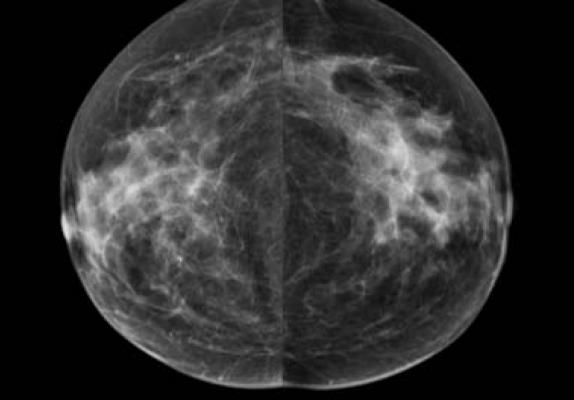
November 26, 2018 — Women age 75 years and older should continue to get screening mammograms because of the comparatively high incidence of breast cancer found in this age group, according to a new study. The study was presented at the 2018 annual meeting of the Radiological Society of North America (RSNA), Nov. 25-30.
Guidelines on what age to stop breast cancer screening have been a source of confusion in recent years. In 2009, the U.S. Preventive Services Task Force (USPSTF) released controversial guidelines stating there was not enough evidence to assess benefits and harms of screening mammography in women age 75 and older. However, other professional groups advise that women may continue to undergo mammography screening as long as they are in good health.
“Ongoing debate exists regarding the age to cease screening mammography,” said Stamatia V. Destounis, M.D., radiologist at Elizabeth Wende Breast Care LLC, in Rochester, N.Y. “Our findings provide important data demonstrating that there is value in screening women over 75 because there is a considerable incidence of breast cancer.”
For the study, Destounis and colleagues analyzed data from 763,256 screening mammography exams at Elizabeth Wende Breast Care between 2007 and 2017. Screening-detected cancer was diagnosed in 3,944 patients. Further analysis was performed to identify the number and type of cancers diagnosed among women 75 years of age and older.
There were 76,885 patients (10 percent) age 75 and older included in the study. The average age of the patients was 80.4. A total of 645 malignancies were diagnosed in 616 patients, for a cancer rate of 8.4 detections per 1,000 exams in this age group.
“For the relatively small percentage of our screening population that was comprised of women 75 and older, the patients diagnosed in this population made up 16 percent of all patients diagnosed with screening-detected cancers,” Destounis said.
Researchers also found that 82 percent of the malignancies diagnosed were invasive cancers, of which 63 percent were grade 2 or 3, which grow and spread more quickly. Ninety-eight percent of the cancers found were able to be treated surgically. Positive lymph nodes were reported at surgical excision in 7 percent of the patients. Seventeen cancers were not surgically treated due to advanced patient age or overall degraded patient health.
“Most of the tumors found in this age group were invasive, and almost all of these patients — 98 percent — underwent surgery,” Destounis said.
Mammography plays a critical role in the early detection of breast cancer, because it can show changes in the breast up to two years before a woman or her physician can feel them, and early detection leads to better treatment options and improved survival.
Destounis advises women over 75 who are in relatively good health to continue routine screenings.
“The benefits of screening yearly after age 75 continue to outweigh any minimal risk of additional diagnostic testing,” she said.
Co-authors are Andrea L. Arieno, B.S., and Amanda Santacroce, B.A.
For more information: www.rsna.org

 October 19, 2026