News | Brachytherapy Systems | October 31, 2018

Eighty-two percent of men in single-institution study reported no complications at four months post-procedure

Prostate Brachytherapy Shows Low Incidence of Short-Term Complications

October 31, 2018 — A new analysis of nearly 600 men receiving brachytherapy for prostate cancer shows overall procedure-related complications within four months of treatment is less than 20 percent. All patients were treated at Fox Chase Cancer Center in Philadelphia.

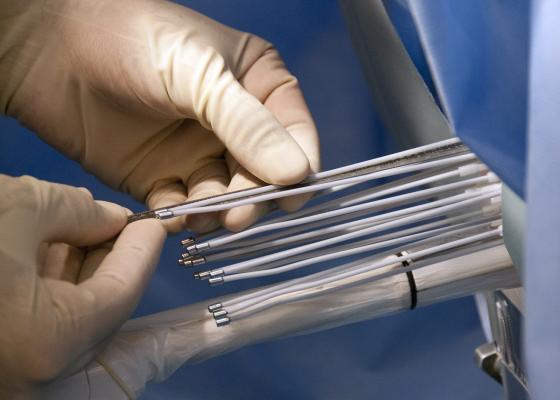
Brachytherapy is a form of internal radiation therapy in which doctors implant permanent or temporary radioactive sources into the prostate. It confines the radiation to the tumor and reduces radiation exposure to the surrounding healthy tissues. It can be administered either as permanent low dose-rate (LDR) implant, or as temporary high dose-rate (HDR) implant. In this study, 97 men received HDR and 485 received LDR.

Of the 582 men studied, 477, or 82 percent reported no complications. The most common complication within four months was lower urinary tract symptoms, which affected 8.4 percent of the patients.

Douglas Lee, DO, a radiation oncology resident at Fox Chase, led the study and presented it at an oral session at the 60th Annual Meeting of the American Society for Radiation Oncology (ASTRO), Oct. 21-24 in San Antonio, Texas.

“There have been several studies of long-term complications associated with brachytherapy, but this is one of the largest analyses of the near-term procedural complications,” Lee said. “Our findings add to the data showing that brachytherapy is safe for men treated at a single institution with expertise in this treatment.”

In the United States, prostate cancer is the most commonly diagnosed cancer in men. Nearly 200,000 cases are diagnosed in each year. It is frequently treatable, especially when diagnosed at earlier stages.

Read more about late-breaking clinical trials presented at ASTRO 2018.

For more information: www.astro.org


Related Content

News | Women's Health

Nov. 3, 2025 — —A new radioimmunotherapy approach has the potential to cure human epidermal growth factor receptor 2 ...

Time November 04, 2025
arrow
Feature | Kyle Hardner

Radiotherapy contributes to about 40% of all cancer cures but still lags behind systemic therapy in funding and ...

Time October 21, 2025
arrow
News | Stereotactic Body Radiation Therapy (SBRT) | American Society for Radiation Oncology

Sept. 29, 2025 — A new clinical trial report finds that stereotactic radiation therapy offers long-term survival ...

Time October 15, 2025
arrow
News | Proton Therapy

Sept. 28, 2025 — Leo Cancer Care has launched Grace, the company's upright photon therapy system. Grace is named after ...

Time October 03, 2025
arrow
News | Radiation Therapy | American Society for Radiation Oncology (ASTRO)

Sept. 29, 2025 — Radiation therapy may offer a comparable and potentially safer alternative to repeat catheter ablation ...

Time September 30, 2025
arrow
News | Radiation Therapy

Sept. 26, 2025 – Accuray Inc. has introduced the Accuray Stellar* solution. Initially for the U.S. market, the new ...

Time September 29, 2025
arrow
News | Computed Tomography (CT)

Sept. 26, 2025 — At the American Society for Radiation Oncology (ASTRO) 2025 annual meeting in San Francisco, Calif ...

Time September 29, 2025
arrow
News | Lung Imaging

Sept. 26, 2025 ― Researchers from the University of Texas MD Anderson Cancer Center will present new data at the ...

Time September 29, 2025
arrow
News | ASTRO

Sept. 26, 2025 — Artera, the developer of multimodal artificial intelligence (MMAI)-based prognostic and predictive ...

Time September 29, 2025
arrow
News | Radiation Therapy

Sept. 25, 2025 — GE HealthCare has announced updates to Intelligent Radiation Therapy (iRT), a new version of the ...

Time September 25, 2025
arrow
Subscribe Now