News | Magnetic Resonance Imaging (MRI) | November 02, 2017

Mallinckrodt Institute of Radiology at Washington University School of Medicine acquires new MRI scanner that supports more precise, personalized care

Siemens Healthineers Announces First U.S. Installation of Magnetom Vida 3T MRI Scanner

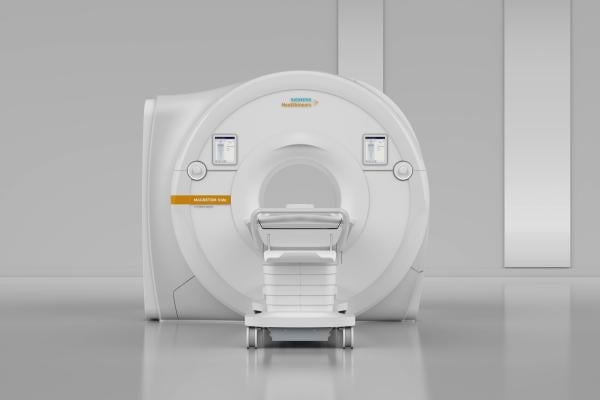
November 2, 2017 — Mallinckrodt Institute of Radiology at Washington University School of Medicine, St. Louis, recently became the first U.S. healthcare institution to install the Magnetom Vida 3 Tesla (3T) magnetic resonance imaging (MRI) scanner from Siemens Healthineers. The scanner features new BioMatrix technology that addresses patients’ anatomical and physiological differences as well as user variability.

The 70-cm scanner includes a new magnet design and up to 60/200 XT gradient performance to support high-end clinical applications. Its BioMatrix technology — a collection of sensors, tuners and interfaces — enables the scanner to adapt automatically to anatomical and physiological characteristics to provide consistent, high-quality imaging for all patient types. The scanner’s architecture and innovative applications simplify and accelerate workflows while increasing exam precision and patient comfort. Its GO technologies automate and simplify workflows from the start of the scan through quality control of the image data, resulting in increased productivity for routine examinations throughout the body. And the Eco-Power technology deactivates power-hungry components that are inactive for long periods, potentially lowering the total cost of ownership over the scanner’s lifetime.

“We’re using the scanner in clinical trials and other research studies involving cancer patients and patients with neurodegenerative diseases, such as Alzheimer’s, as well as for cardiac imaging,” said Pamela K. Woodard, M.D., senior vice chair and division director of radiology research facilities at Washington University’s Mallinckrodt Institute of Radiology. “In addition to accommodating a broad range of imaging studies, the new scanner will cut some MRI scan times by half, to 30 minutes. This benefits patients by reducing the time they spend in the scanner. It also means greater scheduling flexibility and increased access to equipment for our researchers.”

For more information: www.usa.siemens.com


Related Content

Feature | Teleradiology | Kyle Hardner

Once viewed as a solution for after-hours coverage, teleradiology is rapidly expanding into a critical part of radiology ...

Time November 06, 2025
arrow
News | Radiology Imaging | UC San Diego Health

Oct. 16, 2025 — A strategic collaboration between UC San Diego Health and GE HealthCare will focus on bringing advanced ...

Time October 20, 2025
arrow
News | Computed Tomography (CT)

Sept. 26, 2025 — At the American Society for Radiation Oncology (ASTRO) 2025 annual meeting in San Francisco, Calif ...

Time September 29, 2025
arrow
News | Computed Tomography (CT)

Aug. 26, 2025— Esaote North America, Inc., a provider of dedicated MRI, Ultrasound, and Healthcare IT solutions, has ...

Time August 27, 2025
arrow
News | RSNA 2025

Aug. 13, 2025 — Registration is now open for the RSNA 111th Scientific Assembly and Annual Meeting, the world’s leading ...

Time August 13, 2025
arrow
News | Radiology Imaging

Aug. 12, 2025 – Medical imaging methods such as ultrasound and MRI are often affected by background noise, which can ...

Time August 12, 2025
arrow
News | Artificial Intelligence

July 22, 2025 — GE HealthCare has topped a U.S. Food and Drug Administration (FDA) list of AI-enabled medical device ...

Time July 23, 2025
arrow
News | Prostate Cancer

July 16, 2025 — Artificial intelligence can improve diagnostic consistency and reduce false-positives in prostate cancer ...

Time July 22, 2025
arrow
News | Prostate Cancer

June 26, 2025 – Quibim, a global provider of quantitative medical imaging solutions, has launched AI-QUAL, a new feature ...

Time June 26, 2025
arrow
News | Pediatric Imaging

April 10, 2025 — Cincinnati Children’s and GE HealthCare will form a strategic research program focused on driving ...

Time April 10, 2025
arrow
Subscribe Now