September 20, 2017 — RaySearch will be exhibiting its next-generation oncology information system (OIS) RayCare, among other highlights, at the American Society for Radiation Oncology (ASTRO) 2017 Annual Meeting, Sept. 24-27 in San Diego.
RayCare, which will be released in December 2017, is a machine-learning OIS created to support every step of cancer care and enable truly comprehensive treatment organized around each patient’s needs. RayCare integrates seamlessly with RayStation, and is designed to connect all the oncology disciplines, fluidly coordinate tasks and ensure optimal use of resources.
RayCare will consolidate the multiple software systems that are commonly in use, including systems for medical oncology, radiation oncology and surgical oncology. Integrating the varied activities in these workflows saves time, reduces complexity and minimizes the risk of errors that can occur when transferring information between systems. And with a wide range of data immediately accessible to everyone who needs it, RayCare will bring adaptive treatment within reach for every clinic.
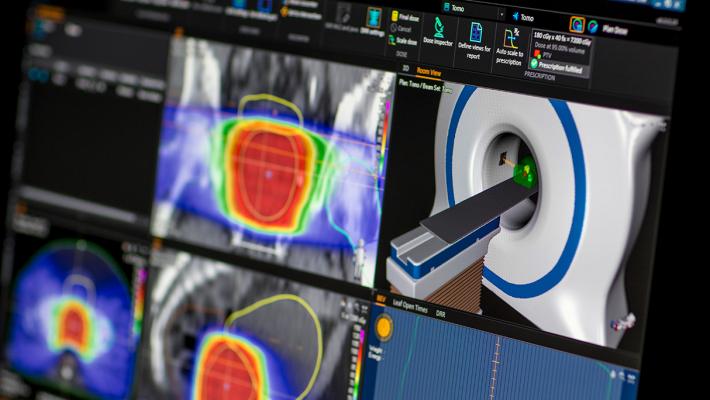
The latest RayStation innovations will all be on show at ASTRO. Key features in RayStation 6 include support for TomoTherapy. This addition made RayStation the only system to enable planning for both conventional linear accelerators (linacs) and TomoTherapy systems, according to RaySearch, giving one point of control for all treatment planning activities.
RayStation 6 also features magnetic resonance (MR)-based planning, which makes it possible to use an MR image as the planning image for photon therapy as well as simultaneous optimization of multiple beam sets for segmented multileaf collimators (SMLC), dynamic multileaf collimators (DMLC) and volumetric modulated arc therapy (VMAT). Other highlights include Monte Carlo dose calculation for proton pencil beam scanning (PBS) and PBS planning with block apertures.
RayStation has extensive automated planning features that help optimize workflows and create new treatment possibilities. Plan Explorer, for example, makes it possible to automatically generate a large number of high-quality treatment plan alternatives, saving valuable time and giving the clinician a wide range of options to consider.
RayStation is designed to make adaptive therapy easy to implement and perform in clinical practice. At the RaySearch booth, attendees can discover how automation features and smart tools in the fully integrated dose tracking and adaptive planning modules make it straightforward to get started.
Read the article "Oncology Information Systems Need to Integrate"
For more information: www.raysearchlabs.com

 October 13, 2026