July 25, 2016 — A multidisciplinary research team has developed a high-temperature superconducting coil that allows magnetic resonance imaging (MRI) scanners to produce higher resolution images or acquire images in a shorter time than when using conventional coils. The team is led by University of Houston (UH) scientist Jarek Wosik.
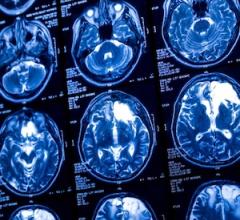
Wosik, a principal investigator at the Texas Center for Superconductivity at UH, said test results show the new technology can reveal brain structures that aren't easily visualized with conventional MRI coils. He also is a research professor in the UH Department of Electrical and Computer Engineering.
The cryo-coil works by boosting the signal-to-noise ratio (SNR) — a measure of the strength of signals carrying useful information — by a factor of two to three, compared with conventional coils. SNR is critical to the successful implementation of high resolution and fast imaging.
Wosik said the cryo-coil reveals more details than a conventional coil because of its enhanced SNR profile. Where a conventional coil does not have enough sensitivity to "see," a superconducting coil can still reveal details. These details will remain hidden to conventional coils even when image acquisition is repeated endlessly.
For the initial tests, the probe was optimized for rat brain imaging, useful for biomedical research involving neurological disorders. But it also has direct implications for human healthcare, Wosik said.
"Research in animal models yields critical information to improve diagnosis and treatment of human diseases and disorders," he said. "This work also has the potential to clearly benefit clinical MRI, both through high-quality imaging and through shortening the time patients are in the scanner."
Results from preliminary testing of the 7 Tesla MRI Cryo-probe were presented at the International Symposium of Magnetic Resonance in Medicine annual meeting in May. The coil can be optimized for experiments on living animals or brain tissue samples, and researchers said they demonstrated an isotropic resolution of 34 micron in rat brain imaging. In addition to its use in MRI coils, superconductivity lies at the heart of MRI scanning systems, as most high-field magnets are based on superconducting wire.
In addition to Wosik, collaborators on the project include Ponnada A. Narayana, director of the Magnetic Resonance Imaging Center and a professor in the Department of Diagnostic and Interventional Imaging at the University of Texas Health Science Center at Houston; Kurt H. Bockhorst, senior research scientist at UT Houston; Kuang Qin, a graduate student working with Wosik; and I-Chih Tan, assistant professor in the Department of Neuroscience at Baylor College of Medicine.
"Compared to corresponding standard room temperature MRI coils, the performance of the cooled normal metal and/or the high-temperature superconducting receiver coils lead either to an increase in imaging resolution and its quality, or to a very significant reduction in total scan time," Wosik said.
For more information: www.ismrm.org

 October 07, 2026