June 8, 2016 — The amount a heart ‘bleeds’ following a heart attack can predict the severity of future heart failure, according to research presented at the British Cardiovascular Conference in Manchester, England.
Bleeding, or bruising in the heart, affects over 40 percent of people who suffer from a heart attack. The researchers have now found that this injury is associated with a higher risk of developing heart failure in the months following a heart attack.
There are 188,000 hospital episodes attributed to heart attack in the United Kingdom each year — around one every three minutes. But although around 7 out of 10 people now survive a heart attack, many are left with heart failure.
The British Heart Foundation-funded study found that bleeding was linked to a 2.6 times greater risk of adverse remodeling, where the heart muscle changes shape, which is a precursor to heart failure. It is also linked to a six times greater risk of either death or heart failure following a heart attack.
The researchers also validated a test for use at the time of heart attack treatment to rule-in or rule-out heart muscle bleeding, and the likelihood of survival free of heart failure. This information would be useful to doctors to identify patients who are at risk of adverse outcome for more intensive treatment. The findings will pave the way to find new treatments to prevent bleeding following a heart attack and the subsequent onset of heart failure.
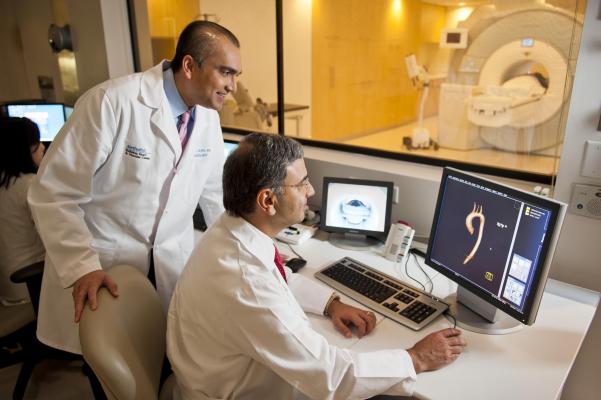
Magnetic resonance imaging (MRI), a non-invasive scan, can be used after a heart attack to monitor heart muscle bleeding, which happens in phases. The first phase is in the 12 hours following a heart attack, and the second takes place within two to three days. This provides a window of opportunity to introduce treatments to prevent the second phase of bleeding, which could reduce or prevent the later onset of heart failure.
Prof. Colin Berry, from the University of Glasgow, who led the study said, “This research has provided us with a new understanding of heart muscle injury and how it develops. We can now focus our research on developing new treatments to reduce the level of this injury following a heart attack.
“The study has also presented a new way of identifying those at a higher risk of heart failure before the condition develops. This knowledge can be used to identify those most in need of interventions and monitoring earlier.”
For more information: www.bcs.com/conference

 October 07, 2026