News | Computed Tomography (CT) | April 13, 2016

Agency says while device operation could be impacted, risk of clinically significant adverse events is extremely low

computed tomography, electronic medical devices, interference, FDA

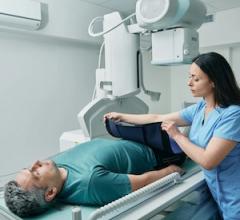
April 13, 2016 — The U.S. Food and Drug Administration (FDA) has received a small number of reports of adverse events that are believed to be associated with computed tomography (CT) imaging of some implantable and wearable electronic devices. These include insulin pumps, cardiac implantable electronic devices and neurostimulators.

The agency’s current understanding is that when a CT scanner directly irradiates the circuitry of certain implantable or wearable electronic medical devices (i.e. when the device is visible in the resulting CT image), it can cause sufficient electronic interference to affect the function and operation of the medical device.

The probability that this interference can cause clinically significant adverse events is extremely low. Furthermore, the probability of X-ray electronic interference is lower when the radiation dose and the radiation dose rate are reduced. Interference is completely avoided when the medical device is outside of the primary X-ray beam of the CT scanner.

FDA said the presence of insulin pumps, cardiac implantable electronic devices and neurostimulators should not preclude the performance of an appropriate, medically indicated CT scan. The probability of an adverse event being caused by exposing these devices to CT irradiation is extremely low, and it is greatly outweighed by the clinical benefit of a medically indicated CT examination.

Healthcare professionals and patients are encouraged to report adverse events or side effects related to the use of these products to the FDA's MedWatch Safety Information and Adverse Event Reporting Program.

For more information: www.fda.gov


Related Content

News | Radiology Business

March 31, 2026 — Radon Medical Imaging, a medical imaging equipment maintenance and repair services company, has has ...

Time March 31, 2026
arrow
News | Radiology Imaging

March 26, 2026 — GE HealthCare has announced a renewed research collaboration with Stanford Medicine Department of ...

Time March 30, 2026
arrow
News | Cardiac Imaging

March 28, 2026 — When Ashley Perlow felt a sharp pain shoot across her chest and into both wrists, she didn't think it ...

Time March 30, 2026
arrow
News | FDA

March 24, 2026 — MARS Bioimaging, a New Zealand–headquartered medical device company, has received U.S. Food and Drug ...

Time March 25, 2026
arrow
News | Radiology Imaging

March 23, 2026 — Samsung Medison hsa announced that its U.S. medical imaging businesses, previously operating as ...

Time March 23, 2026
arrow
News | Breast Imaging

March 10, 2026 — QT Imaging Holdings has received U.S. Food and Drug Administration (FDA) 510(k) clearance for an ...

Time March 13, 2026
arrow
News | Lung Imaging

March 11, 2026 — Noah Medical has announced the publication of the MATCH 2 study in the international, peer-reviewed ...

Time March 12, 2026
arrow
News | Computed Tomography (CT)

March 5, 2026 — At ECR 2026, Royal Philips introduced Rembra, its next-generation radiology CT system designed for the ...

Time March 09, 2026
arrow
Feature | Artificial Intelligence | Kyle Hardner

Once considered an adjunct brain cancer therapy and a last-resort treatment, noninvasive radiosurgery has evolved ...

Time March 09, 2026
arrow
News | Artificial Intelligence

March 2, 2026 — RadNet, Inc. has acquired Gleamer SAS, a radiology AI company based in Paris, France. Gleamer will be ...

Time March 03, 2026
arrow
Subscribe Now