John Wood, M.D., Ph.D. Image courtesy of Children's Hospital Los Angeles.
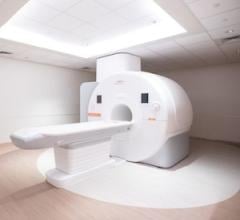
March 23, 2015 — Investigators at The Saban Research Institute of Children's Hospital Los Angeles have demonstrated that magnetic resonance imaging (MRI) of the liver is more accurate than liver biopsy in determining total body iron balance in patients with disorders requiring blood transfusion therapy. This discovery follows the researchers earlier work in pioneering techniques to use MRI to noninvasively measure liver iron. Their study has been published online in Magnetic Resonance Imaging.
"Measuring total body iron using MRI is safer and less painful than biopsy," said John Wood, M.D., Ph.D., cardiologist and biomedical engineer at CHLA. "In this study we've demonstrated that it is also more accurate. MRI should be recognized as the new 'gold standard' for determining iron accumulation in the body." Wood is also a professor of pediatrics at the Keck School of Medicine of the University of Southern California.
Thalassemia and sickle cell disease are two inherited blood disorders characterized by too few healthy red blood cells with adequate hemoglobin. Treatment of these diseases typically requires a blood transfusion every three weeks. However, each transfusion introduces excess iron, which can result in organ damage and even death, making it essential to treat patients with medications called chelating agents to remove excess iron and to monitor total body iron balance. Prior to 2002, children with thalassemia and sickle cell disease required painful liver biopsies every one to two years to monitor iron levels. Liver biopsy can also cause dangerous bleeding and has high sampling variability.
In this study of 49 patients undergoing treatment with an experimental chelating agent, the investigators first closely monitored the amount of iron the patients were receiving by transfusion and the amount of chelating agent they consumed, providing insights into the expected changes in iron levels. MRI estimates of iron concentration were made from the whole liver, eliminating the analytical error and significant sampling variability involved with a biopsy. (Depending upon which part of the liver is sampled, liver biopsy has a reported sampling error of 9 to 44 percent.)
Liver iron was measured at the time of initial treatment in these 49 patients by MRI, and then after 3 months, 6 months, 12 months and 24 months of blood transfusion therapy. Using mathematical simulations, the investigators found that MRI liver iron measurements were more accurate, even when compared to the "best possible" liver biopsy. In practice, the accuracy of MRI compared to physical biopsy is likely even greater than estimated, according to Wood.
For more information: www.chla.org
 October 19, 2026