February 11, 2015 — A pioneering clinical trial is testing whether focusing high-frequency sound waves onto the surface of bone where cancer has spread can burn away the source of pain.
The cutting-edge technique focuses ultrasound beams to produce heat – just as a magnifying glass can with the sun’s rays.
Researchers at The Institute of Cancer Research, London, and The Royal Marsden NHS Foundation Trust are testing whether ultrasound therapy can relieve pain in patients whose cancers have spread to the bone.
The first five patients have already been treated in the clinical trial, with encouraging reductions in the pain they were experiencing from bone tumors.
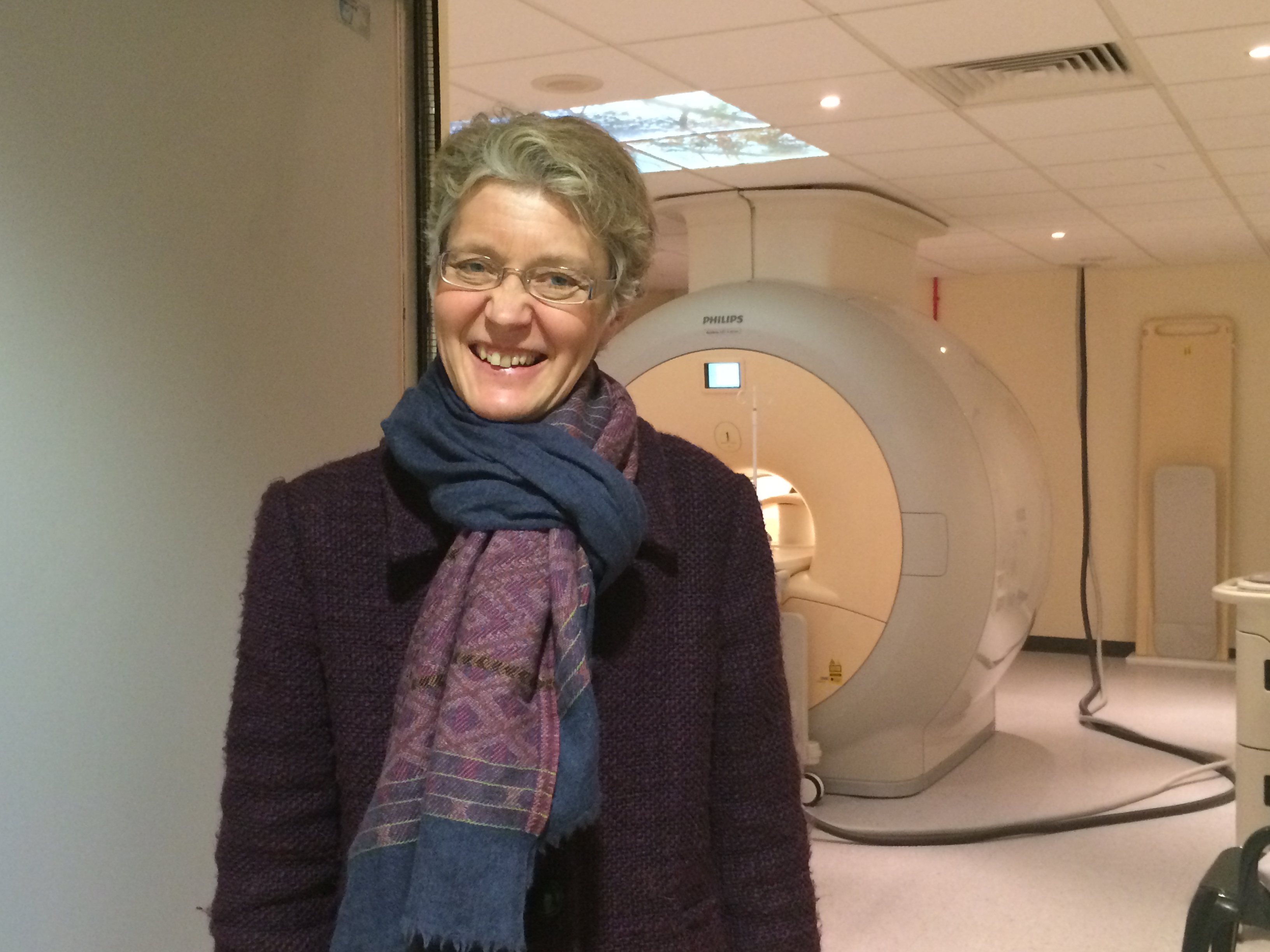
The technique, known as high-intensity focused ultrasound (HIFU), concentrates ultrasound energy precisely on a target in the body to thermally destroy tissue. The technology is coupled with magnetic resonance imaging (MRI) guidance to identify, target and track treatment in real time. The treatment produces heat to destroy the nerve tissue in the bone around the tumor causing the pain, while leaving adjacent areas unharmed.
Ultrasound has traditionally been used as a way of imaging the body but, used at higher power, researchers believe it offers promise as an exciting new way of treating cancer.
Patients whose cancers have metastasised to the bone can experience intense bone pain, which can severely reduce their quality of life. HIFU could provide a non-invasive way of controlling pain for these patients where radiotherapy is no longer an option, or where other treatments have been unable to control the disease.
If this HIFU study proves successful for pain control, it could lead to further studies at ICR and the Royal Marsden to thermally destroy local tumors at an earlier stage of the disease, possibly helping to extend life.
Study co-leader Gail ter Haar, professor of Therapeutic Ultrasound at The Institute of Cancer Research, London, said: “Focused ultrasound is an exciting potential cancer treatment because of its ability to target tumors very precisely. The point onto which the ultrasound beam is focused gets very hot, but the surrounding tissue is left unharmed. It’s like using a magnifying glass in the sun to start a fire, where you need to form a sharp focal spot on the dry tinder.”
Study co-leader Nandita deSouza, professor of Translational Imaging at The Institute of Cancer Research, London, and Honorary Consultant at The Royal Marsden NHS Foundation Trust, said: “We’re still learning how best to use focused ultrasound, but we believe it has real potential for improving the quality of life of patients with advanced cancer. Cancers that have spread to the bone can cause intense pain, and further radiotherapy may not be an option. It is early days in our trial, but we hope ultrasound therapy will prove effective at reducing the pain caused by bone metastases, and offer the chance for patients to live the final stages of their lives much more comfortably.”
The trial is part of a wider initiative between the ICR, The Royal Marsden, the Focused Ultrasound Foundation and Philips, the developer of the HIFU system. This collaboration is creating a state-of-the-art resource for clinicians and scientists to establish global standards for focused ultrasound and accelerate development of the technology to treat cancers.
“MR imaging is emerging in oncology applications, because of its excellent real-time 3-D visualization of both soft tissue anatomy and physiological processes”, said Christopher Busch, general manager MR Therapy at Philips. “Combining focused ultrasound thermal therapies with real-time MR imaging and monitoring is a powerful concept that has the potential to become a new precision treatment tool in oncology.”
For more information, www.icr.ac.uk, www.fusfoundation.org, www.philips.com/newscenter

 October 07, 2026