September 15, 2014 — A comparison of five-year sexual function outcomes, as reported by patients treated with external beam radiation therapy (EBRT) versus combination EBRT plus brachytherapy, indicates the utilization of vessel-sparing radiation therapy makes cure possible without compromising long-term sexual function, according to research presented today at the 56th annual meeting of the American Society for Radiation Oncology (ASTRO).
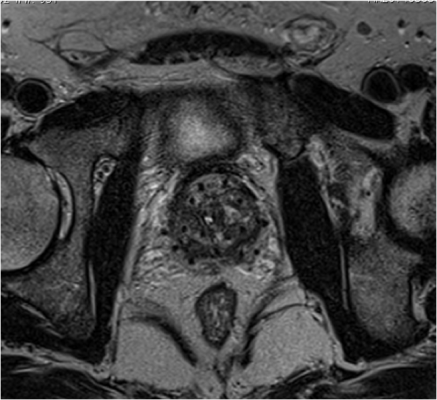
The study examined the patient-reported outcomes of 91 men with prostate cancer who received magnetic resonance imaging (MRI)-guided, vessel-sparing radiation at University of Michigan Providence Cancer Institute. The vessel-sparing radiation technique limits the amount of radiation to critical erectile tissues using MRI scans to identify the blood vessels responsible for erections. When radiation dose is limited to these critical structures, the risk of erectile dysfunction is lowered.
Of the 91 patients studied, all patients received EBRT. Forty-two of the patients received only EBRT (>77.8Gy), and 49 patients received EBRT plus brachytherapy, the implantation of radioactive seeds near the prostate. The combination patients received brachytherapy in the form of an I-125 permanent prostate implant. None of the patients received androgen deprivation therapy (ADT).
Sexual function at baseline, two years and five years post-therapy was evaluated via patient reported outcomes using two scales — the International Index of Erectile Function (IIEF) scale and a simple, three-item questionnaire that asked patients to indicate which applied to them: 1) I am able to be sexually active without aids or medications; 2) I am able to be sexually active with aids or medications; or 3) I am not able to be sexually active.
The three-question scale was used in addition to the IIEF, which validates erection quality by sexual performance with a partner, because many men were not sexually active with a partner, despite their ability to be active with a partner. Patient-reported outcome on sexual performance according to the IIEF was lower than the outcome reported according to the three-question scale. The average two-year follow-up IIEF scores for EBRT patients and combination therapy patients were 16.5 and 20.8, respectively. The average five-year follow-up of IIEF scores for EBRT patients and combination therapy patients were 15.4 and 16.9, respectively
According to the three-question scale, erectile function was remarkably preserved using MRI-planned vessel-sparing treatment, even in patients who received combination therapy: 78.6 percent of patients who received EBRT (33 of 42) and 91.8 percent of patients who received combination therapy (45 of 49) reported the ability to be sexually active with or without aids at five years post-treatment.
“In the past, men with prostate cancer expected to pay a high toll in loss of quality of life to achieve cure and were willing to accept that as necessary,” said lead study author Patrick W. McLaughlin, M.D., director of radiation oncology at University of Michigan Providence Cancer Institute in Novi, Mich. “This study makes it clear that even with combination radiation protocols, which are capable of curing the majority of prostate cancers more than 90 percent of the time, avoidance of critical adjacent tissues, such as vessel-sparing, makes cure and quality of life an achievable goal for many men.”
For more information: www.astro.org

 October 19, 2026