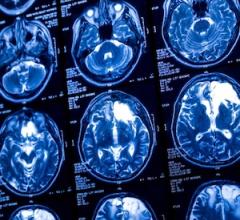
Elekta's Neuromag system for magnetoencephalography.
March 9, 2010 - Researchers at Massachusetts Institute of Technology (MIT) will use a new magnetoencephalography (MEG) to explore brain function, including normal cognition in children and adults, as well as the neural basis of autism, depression, schizophrenia, and other brain disorders.
MEG can detect the very weak magnetic fields arising from electrical activity in the brain, and allows researchers to monitor the timing of brain activity with millisecond precision. MIT, a leading centers for neuroscience research, will use the Elekta Neuromag to study the brain at the molecular and cellular level to human cognition and computational modeling.
The Elekta Neuromag system will be housed in the Martinos Imaging Center within the Brain and Cognitive Sciences complex, home to the McGovern Institute of Brain Research, the Picower Institute for Learning and Memory and the Department of Brain and Cognitive Sciences. Delivery of the system is expected in June and is expected to be operational by the fall of 2010.
Professor John Gabrieli, director of the Martinos Imaging Center, said he intends to use MEG to study the neural and genetic basis of autism, dyslexia and other developmental disorders. By combining MEG with other brain imaging modalities, such as magnetic resonance imaging (MRI) and electroencephalography (EEG), Dr. Gabrieli plans to search for differences in brain activation in subjects with different genetic variants that have been linked to these conditions. “Our goal is to correlate the changes in brain function with genetic risk factors, and in turn identify categories of patients for whom optimal treatment strategies could be tailored,” he said.
The Director of the McGovern Institute Professor Robert Desimone will study the neural basis of attention. Animal studies have indicated that high-frequency brain waves known as gamma oscillations become synchronized across brain areas as these areas communicate with each other to control attention. Extending this work to humans using MEG to study as schizophrenia, Desimone will examine how gamma oscillations are disrupted in schizophrenia, which may help explain why people with schizophrenia often experience difficulty organizing their thoughts and perceptions into a coherent and meaningful whole.
Professor Christopher Moore, an investigator at the McGovern Institute, will use the system to investigate how the cerebral cortex processes rapid sensory information. Based on his work on cortical circuitry, Moore has developed a biophysical model to account for the MEG signal. “Our aim is to link the signals that we can record from human subjects to the underlying brain mechanisms that give rise to those signals,” he said.
For more information: web.mit.edu/mitmri, mcgovern.mit.edu and www.elekta.com

 October 07, 2026