May 18, 2009 – Siemens Healthcare approach to stroke diagnosis combines Siemens SOMATOM computed tomography (CT) scanner technology and CT Neuro Engine, offering a solution for all aspects of neuroradiology, at the 47th Annual Meeting of the American Society of Neuroradiology in Vancouver, British Columbia, Canada, May 16-21, 2009,
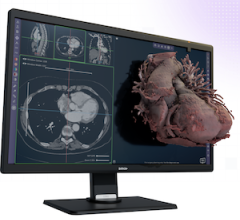
The CT Neuro Engine is said to make data available in only seconds. With syngo Expert-I findings can be shared with the treating physician or a colleague by simply granting them remote access from any PC in the network. To speed up clinical workflow, 3D evaluations can be performed by simply using syngo WebSpace from any PC or laptop where the Internet can be accessed.
Siemens 3D stroke imaging using SOMATOM CT exquisite image quality provides fully automated 3D syngo Volume Neuro Perfusion CT tools to facilitate quantitative volume evaluation for differential diagnosis of ischemic stroke and supports simultaneous multislice processing, as well as the stringent time and workflow requirements in an emergency setting where time is of the essence. The automated guided workflow provides quick and reliable assessment of dynamic cerebral perfusion parameters, such as cerebral blood flow (CBF), cerebral blood volume (CBV), and time to peak (TTP) and mean transit time (MTT).
CT Neuro Engine is designed to answer the key questions that stroke team faces in diagnosis of ischemic stroke, such as excluding existence of hemorrhage, understanding of irreversibility of infarcted tissue, and determining portion of potentially salvageable tissue.
Siemens Adaptive 4D Spiral technology allows the possibility to adapt the coverage to virtually any organ size, allowing for full brain perfusion information, enabling a comprehensive view whole disease in stroke imaging.
Adaptive 4D Spiral capabilities are currently available to more than 300 CT scanners installed throughout the United States. It is available on SOMATOM Definition Flash, Definition, and Definition AS scanners, including the newly introduced, cost effective 20-slice configuration.
With Adaptive 4D Spiral, the Siemens CT scanners are able to address functional imaging (perfusion images of blood flow over time) specific to the organ being imaged. This allows Siemens to offer information beyond simple perfusion and into phase contrast CT. In the case of a stroke, physicians can use whole-organ perfusion imaging, not only for a small part of the brain, but for all of it.
For more information: http://www.siemens.com/healthcare

 August 21, 2026