February 25, 2009 - Products or services become commoditized when there is no differentiation between how they are perceived, and price becomes the determining factor in provider selection. In radiology, the threat of commoditization has increased in part due to teleradiology, increased information exchange and the development of new technology, according to Bruce I. Reiner, M.D., and Eliot L. Seigel, M.D., authors of Decommoditizing Radiology, an article appearing in the March issue of the Journal of the American College of Radiology (JACR).
In order for radiology to avoid the commoditization trend, imaging services must be differentiated on the basis of qualitative measures — those that are reproducible and objective. Existing initiatives are in place; however, the authors offer several recommendations for expansion, as well as opportunities to tie them to economic incentives, such as pay for performance.
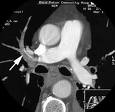
The time spent interpreting CT pulmonary angiographic studies is critical; death from an acute pulmonary embolism can occur in as little as one to two hours. The Effect of Teleradiology on Time to Interpretation for CT Pulmonary Angiographic Studies, by Scott Kennedy, M.D., et al., evaluates the results and implications of surveys completed by radiology administrators and emergency medicine physicians at Yale-New Haven Hospital. The surveys were used to establish target benchmarks for optimal interpretation time and to assess the impact of adding off-hours interpretation to current practice.
The authors reported that adding only 40 hours of teleradiology coverage per week decreased turn-around time for preliminary written reports, suggesting that teleradiology can help meet quality improvement standards and ensure timely diagnosis of time-critical illnesses.
Source: The Journal of the American College of Radiology (JACR)
For more information: www.jacr.org

 October 07, 2026