October 16, 2008 - The National Center for Research Resources (NCRR), a part of the National Institutes of Health (NIH), announced it will provide up to an estimated $11 million over the next five years to research on imaging techniques designed specifically to better diagnose and treat diseases and analyzing sets of interacting proteins.
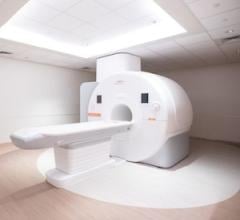
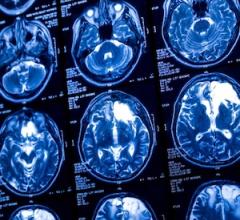
NIH will fund studies at two new Biomedical Technology Research Centers (BTRCs) with access to specialized research tools. One center will develop innovative imaging techniques using magnetic resonance imaging (MRI) designed specifically to better diagnose and treat diseases, such as Alzheimer’s, where the nervous system progressively deteriorates. A second center will create cutting-edge software for identifying and analyzing sets of interacting proteins that are important in a wide range of diseases, such as cancer.
Each center creates critical and often unique technology to apply to a broad range of basic, clinical and translational research. Serving as test beds for solving complex biomedical research problems, BTRC research projects combine the expertise of multidisciplinary technical and biomedical experts both within the center and through collaborative partnerships. These efforts result in innovative solutions to today’s health challenges, which are then actively disseminated to promote rapid adoption and achieve the broadest possible impact.
The new centers are being established at the Northern California Institute for Research and Education Inc. in San Francisco and at the University of California, San Diego.
The Northern California Institute for Research and Education Inc. in San Francisco will receive a five-year award up to an estimated $6.04 million to develop a center for magnetic resonance imaging (MRI) of neurodegenerative disorders. This BTRC will develop innovative and improved MRI techniques for clinicians to better understand, detect, diagnose, and treat diseases, such as Alzheimer’s, Parkinson’s, and amyotrophic lateral sclerosis, also known as Lou Gehrig’s disease.
The advanced techniques developed at the new center will offer researchers and clinicians improved image clarity, more reliable and precise methods for capturing anatomical data, more efficient and accurate reconstruction methods, and improved image processing capabilities.
Through a second BTRC award to the University of California, San Diego, totaling up to an estimated $4.94 million over five years, NCRR will support a new center for computational mass spectrometry that will serve as an international resource in proteomics, enabling more research activities, investigation into unexplored areas of computational proteomics, and support of collaborative research efforts. The goal of a proteomics experiment is often to identify thousands of proteins present in a complex biological sample, and detect differences in the amounts or structures of these proteins when samples are compared (e.g., a tumor vs. normal tissue). Looking at these differences and how they relate to one another can help shed light on the causes or progression of a disease and how drugs might be able to treat the disease.
The complex data generated in these experiments require sophisticated computational tools for interpretation. These tools have lagged behind the rapid evolution of new analytical technologies for proteomics. This new center will bring creative mathematical approaches to mass spectrometry and will build a new generation of reliable open-access software tools that will catalyze exchange and collaboration among experimental and computational researchers in proteomics, furthering advances in this critical field of research. The center will also focus on training the scientific community in the use of the technologies it develops.
For more information: www.ncrr.nih.gov/btrr/2008 and www.ncrr.nih.gov/btrr, www.ncrr.nih.gov and www.nih.gov
 October 07, 2026