November 5, 2007 - According to late-breaking clinical trial results presented at the American Heart Association’s Scientific Sessions 2007, a high-tech imaging technique might replace the more invasive standard coronary angiography as a way for doctors to look at blockages in heart arteries in some patients.
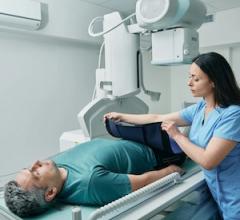
In the Coronary Artery Evaluation Using 64-Row Multidetector Computed Tomography Angiography trial (CORE-64), researchers evaluated the diagnostic accuracy of multidetector spiral CT angiography (MDCTA) compared with conventional coronary angiography (CCA) in detecting coronary artery disease. Coronary angiography is an X-ray examination of the blood vessels of the heart that requires that a very small catheter be inserted into a blood vessel in the groin or arm, positioned at the beginning of the coronary arteries and used to inject a special fluid that is visible by X-ray. The pictures obtained are called angiograms. The MDCTA-64 also takes X-ray pictures of the coronary arteries in patients with suspected coronary artery disease, but it uses 64 detectors to take and combine multiple X-ray pictures and there is no need for catheter insertion.
The study, the first of its kind, included 291 patients in nine centers internationally: three centers in the U.S. and one each in Brazil, Germany, Japan, the Netherlands, Canada and Singapore. All patients were scheduled to undergo CCA for suspected coronary artery disease. Patients first underwent coronary calcium imaging and scoring followed by MDCTA imaging prior to their cardiac catheterization. MDCTA and catheterization images were analyzed by independent core laboratories.
MDCTA was performed using 0.5-millimeter slice image thickness, with 64 simultaneous detector rows. More than 98 percent of the coronary arteries as small as 1.5 millimeters in diameter could be seen using MDCT. Results showed that the test had good diagnostic ability for detecting blockages >50 percent occlusive (Sensitivity= 0.85 and specificity= 0.90, AUC = 0.93). Also, MDCT showed a similar diagnostic ability to CCA in its ability to identify patients who were felt to have severe enough disease to be referred for angioplasty or bypass surgery, though it was less able to determine which specific vessel of the heart was blocked, compared with CCA.
“In patients with suspected coronary artery disease (CAD) and calcium scores less than 600, 64-row MDCTA can assess the presence of significant CAD and the likelihood physicians will refer for coronary revascularization,” said Julie M. Miller, M.D., lead investigator of the study and assistant professor of medicine at Johns Hopkins Hospital, Johns Hopkins University in Baltimore, Md. “The strong performance of 64-row MDCT in this multicenter trial supports its use as a diagnostic test to help us diagnose symptomatic patients who may have significant coronary obstruction. “
Support for this study was provided by Toshiba and Bracco.
Statements and conclusions of study authors that are presented at American Heart Association scientific meetings are solely those of the study authors and do not necessarily reflect association policy or position. The American Heart Association makes no representation or warranty as to their accuracy or reliability.
For more information: www.americanheart.org

 October 07, 2026