March 8, 2016 — Brainlab announced the results of a study with leading international cancer centers aimed at understanding the safety and efficacy of stereotactic body radiation therapy (SBRT) in the treatment of patients with prostate cancer.
Institutions participating in the study included HUG Geneva, Switzerland; OLV Ziekenhuis Aalst, Belgium; VU Medical Center Amsterdam, Netherlands; Centro Medico Teknon, Spain; Neolife Medical Center Istanbul, Turkey; Sanchinarro University Hospital Madrid, Spain; IPO Porto, Portugal; Turku University Hospital, Finland; and Chaim Sheba Medical Center Ramat Gan, Israel.
All facilities have finalized accruing patients in their randomized phase II study and are beginning to compile findings on treatment tolerance and disease control.
SBRT is used to deliver high doses of precisely shaped radiation to a tumor in fewer fractions than traditional radiotherapy, while still aiming to minimize dose to surrounding healthy organs and tissue. To ensure targeting accuracy of such ablative treatments and spare risk organs, image guidance is employed for every treatment, validating patient positioning and accounting for intra-fraction motion.
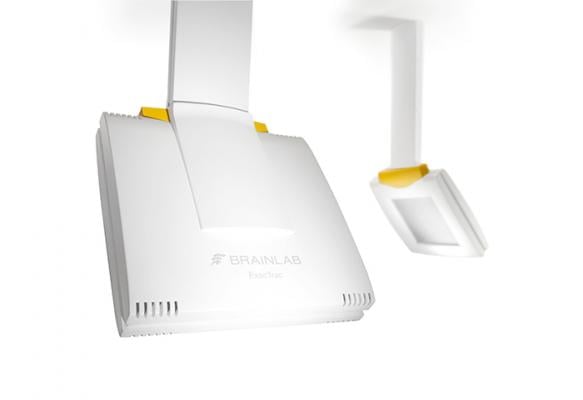
For SBRT, ExacTrac image-guided radiotherapy by Brainlab not only enables clinicians to quickly position the patient with sub-millimetric accuracy, but also provides the ability to detect and correct for prostatic drift throughout treatment. Having the means to accurately monitor and respond to prostate motion at the time of treatment allows clinicians to opt for a hypofractionated treatment regimen, which may not have been previously feasible. These faster treatment schedules not only improve patient comfort but also increase the biological-equivalent dose delivered to cancerous cells.
To investigate the safety of SBRT, the study utilized a fractionation regime of 5 x 7.25Gy (36.25Gy total), which was delivered over two alternative time schedules to two groups of patients. Study group A received treatment every other day for a total of nine days, while study group B received treatment once a week for a total of 28 days. Treating patients once a week is thought to provide less interference with most patients’ lives, while still completing the entire treatment within the tissue repair cycle. Patient study group inclusion was randomized at every treatment institution to guarantee no selection bias. All 152 of the planned patients were recruited for the study. All patient treatment plans were crafted to provide urethral sparing (no more than 6.5Gy/fraction to cover the urethra and surrounding transitional zone), while the rest of the prostate gland was simultaneously boosted to the desired dose of 7.25Gy/fraction. All patients were positioned and monitored with ExacTrac, which required no additional internal immobilization. Patient comfort was increased not only by the faster treatment regimen, but also during each fraction, as no invasive fixation devices, such as rectal balloons, were required.
“Thanks to ExacTrac, the urethra, which is located in the middle of the target, was partially shielded in order to reduce the risk of urinary toxicity,” said the study principal investigator Raymond Miralbell, M.D., professor at Geneva University Medical School and chairman of the Radiation Oncology Department at Centro Medico Teknon in Barcelona. “Due to its speed, accuracy and reliability, ExacTrac is gaining increased popularity for prostate cancer treatment. Initial study results are positive, suggesting that SBRT is both an effective and safe treatment technique. We hope that more patients will benefit from it in the near future.”
Early analysis of treatment schedule regimens suggests that both groups are currently only showing mild urinary acute toxicities with complete resolution six weeks post treatment, indicative of a safe treatment paradigm.
Treatment toxicities will continue to be recorded over the next 18 months, with the study set for completion in 2025. The study will summarize long-term findings and also cover local control, quality of life aspects, biochemical disease-free, metastases-free and disease-specific survival rates.
For more information: www.brainlab.com

 October 01, 2026