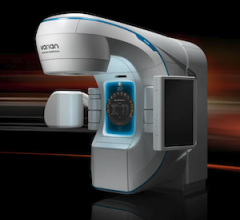
September 1, 2011 – A recent study featured in the newly released Journal of Urology dispels the myth that physicians' offices use prostate cancer treatments more often than hospital outpatient facilities.
The article, "Utilization Trends in Prostate Cancer Therapy," explains that as technology has improved, utilization of both surgical and radiation therapy for management of prostate cancers has increased. Specifically, the pattern increase for intensity-modulated radiation therapy (IMRT) for adenocarcinoma of the prostate, a common type of prostate cancer, in physicians' offices and hospital outpatient facilities is similar.
The principle author, Deepak A. Kapoor, M.D., along with a multi-disciplinary team of co-authors, sought to determine therapeutic trends in the management of adenocarcinoma of the prostate, particularly decision-making in surgery vs. radiation therapy, and whether site of service influenced those trends. The study demonstrated that the percentage of Medicare beneficiaries receiving treatment for prostate cancer has increased in recent years. Although there were increases in both surgery and radiation, the study demonstrated a clear shift toward minimally invasive surgery and newer technologies in radiation.
"Newer treatments, such as IMRT and robotic surgery, allow doctors to be far more precise and administer both surgery and radiation treatments with fewer side effects than older technology, which is why we've seen an increase in utilization by doctors in different settings," said Kapoor, chairman and CEO of Integrated Medical Professionals, and president-elect of the Large Urology Group Practice Association.
The in-office ancillary services exemption (IOASE) to the Stark Law, a federal physician self-referral law, gives patients the option to be treated by their physician in their normal doctor's office. Some claim the IOASE causes utilization to be higher in physician offices than in hospitals.
But the study shows that the IMRT utilization patterns for Medicare beneficiaries were similar across physicians' offices and hospital outpatient facilities, increasing from 7.3 to 11.1 percent and 8.3 to 11.3 percent, respectively, from 2006-08 -- the most current data available at the time of the study.
Radiation and surgery treatments experienced 11.5 and 13 percent increases, respectively, from 2006-08. These trends show that patients are choosing safer, less invasive treatment options, such as IMRT and laparoscopic radical prostatectomy.
Prostate cancer is the most commonly diagnosed cancer among U.S. men and the second leading cause of cancer death.
For more information: http://lugpa.org/about/press.aspx

 October 19, 2026