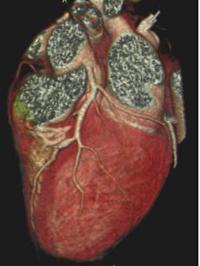
July 12, 2011 – The Society of Cardiovascular Computed Tomography (SCCT) has published the SCCT Guidelines on Radiation Dose and Dose-Optimization Strategies in Cardiovascular CT document, which will be printed in the July/August special radiation focus issue of the Journal of Cardiovascular Computed Tomography. This guideline document reviews available data and provides recommendations regarding interpretation of radiation dose indices and predictors of risk, appropriate use of scanner acquisition modes and settings, development of algorithms for dose optimization and establishment of procedures for dose monitoring.
Over the last few years, CT has developed into a standard clinical test for a variety of cardiovascular conditions. The emergence of cardiovascular CT during a period of dramatic increase in radiation exposure to the population from medical procedures and heightened concern about the subsequent potential cancer risk has led to intense scrutiny of the radiation burden of this new technique. This has hastened the development and implementation of dose reduction tools and prompted closer monitoring of patient dose.
"Significant effort has been devoted to reducing radiation exposure from cardiovascular CT examinations including the development of appropriateness criteria, the implementation of dose-lowering scanner technologies and the regular monitoring of patient doses," said Sandra S. Halliburton, M.D., of Cleveland Clinical Foundation, Cleveland, Ohio. "This guideline document was developed to aid the cardiovascular CT community in incorporating available strategies into standard practice. Our hope is that the information presented will facilitate widespread adoption of existing dose-optimization techniques and enable imagers to provide cardiovascular CT images with the lowest radiation burden to the patient that preserves image quality."
The SCCT Writing Group, composed of eight cardiologists, radiologists and technologists, has been developing this document since 2010. "The importance of this statement, led by Drs. Halliburton and Hausleiter, lies in the opportunity before us to broadly seize technical gains in the field to optimize the safety of imaging through radiation dose reduction. Working from a common 'playbook' on the approach to scan acquisition should lead to more uniform results across centers. And lastly, these consensus recommendations will prepare us to more fully enter the era of performance measures and public reporting of medical radiation exposures. In the end, both patients and the field of cardiovascular CT will benefit," said Allen J. Taylor, M.D., of Washington Hospital Center, Washington, D.C., co-chair of the SCCT Guidelines Committee.
For more information: www.scct.org

 October 07, 2026