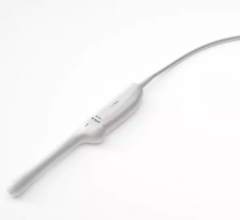
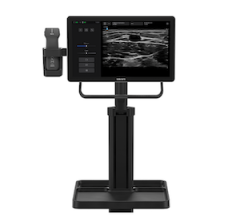
August 30, 2013 — Philips Healthcare launched the Epiq ultrasound system, a first-of-its-kind ultrasound architecture that offers a new approach to creating ultrasound images. Making its debut at the European Society of Cardiology (ESC) 2013 Congress in Amsterdam, Epiq features a new imaging technology called nSIGHT that, when combined with Philips' new Anatomical Intelligence technology, delivers faster speed and improved image clarity. It has received 510(k) clearance from the U.S. Food and Drug Administration (FDA).
Anatomical Intelligence is a rich database of anatomic structural models and adaptive system technology that allows the ultrasound’s computer to automatically identify the anatomy being imaged without human interface. The Epiq system is the first to have this technology built into an ultrasound system. Philips said the system is capable of efficiently producing more definitive clinical results. Anatomical Intelligence provides advanced organ modeling, image slicing and proven quantification, making exams easier to perform, more reproducible and delivering new levels of clinical information.
Epiq offers specific innovations for cardiology, radiology, OB/GYN and general imaging. These technologies include:
- xMatrix 3-D Tranesophageal echo (TEE) and the Anatomically Intelligent Mitral Valve Navigator, which provide a key live 3-D planning solution that allows physicians to make more informed decisions before and during heart valve procedures;
- nSIGHT Imaging technology, a new imaging architecture that provides highly detailed ultrasound images and very good temporal resolution; and
- Enhanced penetration at higher frequencies, which improves imaging, even on patients with high body mass index, where ultrasound has previously been inconclusive.
"Philips is at the forefront of imaging technology innovation, and with Epiq, we are pioneering a way to address significant imaging issues faced by medical professionals in the clinical setting," said Gene Saragnese, CEO Healthcare Imaging Systems, Philips Healthcare. "The combination of Anatomical Intelligence and the use of nSIGHT Imaging technology is a major milestone in the history of ultrasound technology."
"The image quality of Epiq is truly impressive," said Roberto Lang, M.D., director of cardiac imaging and professor of medicine, University of Chicago. "I also appreciate the numerous design elements that make Epiq easier to operate including the standby battery, easy-to-connect transducers and portability; it is clear that Epiq is a system built for today's healthcare environment."
The Epiq ultrasound system also includes other new features. It uses a new ergonomic design, and its weight, 230 pounds, makes it lightweight and more maneuverable than most premium, cart-based ultrasound systems. A noise test determined that Epiq runs at 37-41 dB, which is equivalent to the sound in a library. A new tablet-like interface results in dramatic reduction in reach and button pushes, with 40-80 percent less reach and 15 percent fewer steps.
Philips said the system offers improved image quality with up to a 76 percent increase in penetration and up to 213 percent increase in temporal resolution. The vendor also said its SmartExam technology increases automation and reproducibility of results, which decreases exam time by 30-50 percent, keystrokes by as many as 300 per exam, and results in a higher level of consistency among users. An example of this is auto Doppler, which takes time-consuming color box positioning and sample volume placement from 10 steps to three steps, and reduces the number of repetitive button pushes by an average of 67.9 percent.
For more information: www.philips.com


 October 07, 2026