Image courtesy of Loyola Medicine
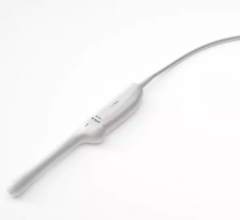
May 29, 2018 — A Loyola Medicine study has found that new ultrasound guidelines can reliably identify pediatric patients who should be biopsied for thyroid cancer.
The study by radiologist Jennifer Lim-Dunham, M.D., and colleagues was presented May 18 during the Society for Pediatric Radiology's annual meeting in Nashville.
Thyroid cancer is a common cause of cancer in teenagers, and the incidence is increasing for reasons that are unclear. Adolescents have a 10-fold greater incidence than younger children, and the disease is five times more common in girls than boys.
The thyroid is a butterfly-shaped gland at the base of the neck that secretes hormones needed for regulation of growth, development and metabolism. Cancer may occur within lumps in the thyroid called nodules.
Thyroid nodules typically are found during routine physical exams or on imaging tests such as computed tomography (CT) scans done for other reasons. A definitive diagnosis requires a percutaneous fine-needle aspiration biopsy – a minimally invasive procedure in which a physician uses a very small needle to withdraw cells from the nodule. The cells are sent to a pathologist, who makes the diagnosis.
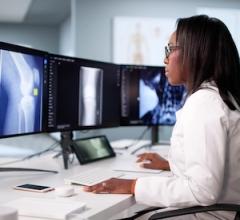
Since most nodules are benign, not all of them require biopsy. Ultrasound exams are used to identify those nodules that look suspicious enough to require biopsy. In 2017, the American College of Radiology (ACR) released a system for grading nodules on a 1 to 5 scale, with 1 being benign and 5 being highly suspicious of cancer. The grades are based on ultrasound features, such as how white or black the nodule appears (echogenicity), whether the edges of the nodule are jagged or smooth and whether there are white dots inside the nodule (echogenic foci).
In the Loyola study, two radiologists used the ACR system to retrospectively grade 74 thyroid nodules from 62 pediatric patients. The ACR grading system proved to be accurate and reproducible. For every one unit increase in the 1-to-5 ACR scale, nodules were 2.63 times more likely to have a malignant diagnosis confirmed by biopsy or surgery.
The findings should reassure physicians and parents that the ACR system can be reliably used to differentiate between thyroid nodules in children that require biopsy and those that do not, Lim-Dunham said. An earlier study led by Lim-Dunham found that a different set of thyroid nodule ultrasound guidelines from the American Thyroid Association also are reliable in children.
The new study is titled "Malignancy Risk Stratification of Pediatric Thyroid Nodules Using ACR Thyroid Imaging, Reporting and Data System (ACR TI-RADS)."
In addition to Lim-Dunham, other co-authors are Iclal Erdem Toslak, M.D., Michael Reiter, M.D., and Brendan Martin, Ph.D.
For more information: www.loyolamedicine.org

 October 07, 2026