News | Breast Imaging | June 22, 2017

Korean study finds adding MRI detects nearly four additional cancers over mammography alone for women who have already undergone breast-conserving surgery

MRI Plus Mammography Improves Detection of New Breast Cancer After Surgery

June 22, 2017 — A new article published by JAMA Oncology compares outcomes for combined mammography and magnetic resonance imaging (MRI) or ultrasonography screenings for new breast cancers in women who have previously undergone breast conservation surgery and radiotherapy for breast cancer initially diagnosed at 50 or younger.

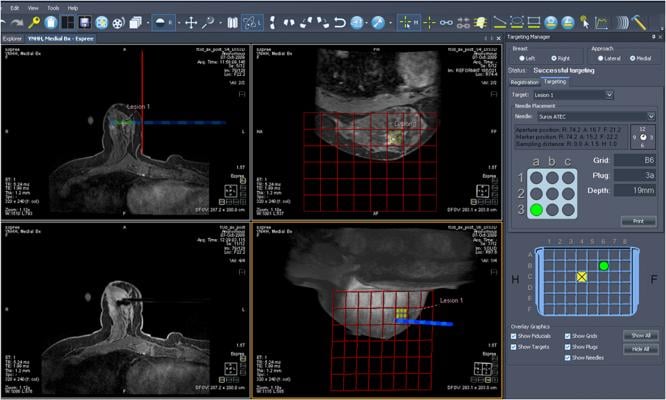
Women who are treated with breast conservation surgery and radiotherapy remain at an increased risk for second breast cancers. The multicenter comparison study by Woo Kyung Moon, M.D., of the Seoul National University College of Medicine, the Republic of Korea, and coauthors included 754 women. Annual mammography, breast ultrasonography and breast MRI were performed for both conserved and contralateral (opposite) breasts during a three-year study period for a total of 2,065 mammograms, ultrasonography and MRI screenings.

The authors report 17 cancers were diagnosed and 13 of the 17 cancers were stage 0 or stage 1. The addition of MRI screening to mammography detected 3.8 additional cancers per 1,000 women over mammography alone and the addition of ultrasonography to mammography detected 2.4 additional cancers, according to the study.

Limitations of the study include there was no control group for comparison of women undergoing mammography alone. Authors also could not evaluate the cost-effectiveness and the effect of MRI or ultrasonography screening on survival benefit.

"After breast conservation therapy in women 50 years or younger, the addition of MRI to annual mammography screening improves detection of early-stage but biologically aggressive breast cancers at acceptable specificity [correctly identifying people who don't have disease]. Results from this study can inform patient decision-making on screening methods after breast conservation therapy," the article concludes.

The study was funded by Bayer Korea.

For more information: www.jamanetwork.com/journals/jamaoncology

Related Content

News | Artificial Intelligence

Dec. 1, 2025 — Researchers at the University of California, Berkeley and University of California, San Francisco have ...

Time December 10, 2025
arrow
News | FDA

Dec. 8, 2025 — Lunit, a provider of AI for cancer diagnostics and precision oncology, has submitted a 510(k) premarket ...

Time December 08, 2025
arrow
News | Breast Imaging

Dec. 01, 2025 — DeepHealth, a wholly owned subsidiary of RadNet, Inc., has launched the DeepHealth Breast Suite,2 an end ...

Time December 04, 2025
arrow
News | Women's Health

Dec. 1, 2025 — ScreenPoint Medical has completed a commercial agreement making its Transpara breast-imaging AI portfolio ...

Time December 03, 2025
arrow
News | Mammography

Nov. 30, 2025 — At RSNA 2025, Siemens Healthineers will introduce new capabilities for its Mammomat B.brilliant ...

Time December 02, 2025
arrow
News | RSNA 2025

Dec. 2, 2025 — Lunit, a provider of AI for cancer diagnostics and precision oncology, will present 14 studies at RSNA ...

Time December 02, 2025
arrow
News | Women's Health

Dec. 1, 2025 — A study of data from seven outpatient facilities in the New York region found that 20-24% of all the ...

Time December 02, 2025
arrow
News | Mammography

Nov. 26, 2025 — GE HealthCare has announced it received FDA Premarket Authorization for Pristina Recon DL, an advanced ...

Time November 29, 2025
arrow
News | Artificial Intelligence

Nov. 25, 2025 – Medical imaging AI company Avicenna.AI has announced a strategic partnership with Ferrum, an AI ...

Time November 25, 2025
arrow
News | Ultrasound Imaging

Nov. 12, 2025 — GE HealthCare and DeepHealth, Inc., a wholly owned subsidiary of RadNet, Inc., have announced their ...

Time November 20, 2025
arrow
Subscribe Now