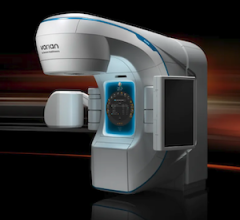
January 6, 2015 — Two-thirds of women treated for early-stage breast cancer in the United States receive longer radiation therapy than necessary, according to a new study published in the Journal of the American Medical Association (JAMA) from Penn Medicine researchers Ezekiel J. Emanuel, M.D., Ph.D., and Justin E. Bekelman, M.D. Their findings reveal that the vast majority of women after breast-conserving surgery receive six to seven weeks of radiation therapy, despite multiple randomized trials and professional society guidelines showing that three weeks of radiation - called hypofractionated whole breast radiation - is just as clinically effective, more convenient, and less costly.
"Hypofractionated radiation is infrequently used for women with early-stage breast cancer, even though it's high-quality, patient-centric cancer care at lower cost," said lead author Bekelman, an assistant professor of radiation oncology, medical ethics and health policy at the University of Pennsylvania's Perelman School of Medicine and Abramson Cancer Center. "It is clinically equivalent to longer duration radiation in curing breast cancer, has similar side effects, is more convenient for patients and allows patients to return to work or home sooner."
Shown to reduce local recurrence and improve overall survival after breast-conserving surgery, conventional whole breast radiation, given daily over five to seven weeks, has been the mainstay of treatment in the United States for women for decades. The use of hypofractionated whole breast radiation, which involves higher doses of radiation given over just three to four weeks, is supported by four randomized trials and 2011 practice guidelines from the American Society for Radiation Oncology (ASTRO).
The researchers found that in 2013, 34.5 percent of women over 50 years old received hypofractionated therapy, up from 10.6 percent in 2008. Among younger women and those with more advanced cancers, 21.1 percent of women received hypofractionated therapy in 2013, up from 8.1 percent in 2008.
The researchers also found that using hypofractionated radiation therapy lowered total healthcare costs paid by insurers in the first year after diagnosis of breast cancer by 10 percent. While patients' out-of-pocket costs were not significantly different between the two therapies, likely because patients had reached their deductible and co-payment maximums, patients who receive hypofractionated therapy are able to reduce time away from work and home because of less time spent in daily radiation treatment, resulting in direct economic and quality-of-life benefits, the authors say.
"Hypofractionated radiation is high-value care and high-quality breast cancer treatment that saves the health care system money. It's a win-win. And yet, only a third or fewer women are getting it in the United States, while in other countries over 70 percent of women receive hypofractionated treatment," said senior author Emanuel, chairman of Penn's Department of Medical Ethics and Health Policy and a breast oncologist.
The findings also highlight big differences in international care for patients with early-stage breast cancer. In Canada, more than 70 percent of women received hypofractionated therapy versus conventional in 2008; that percentage is even greater in the United Kingdom, where the National Institute of Health and Clinical Excellence released guidance recommending it as standard of care in 2009.
In the study, the researchers analyzed insurance claims data provided by Anthem Inc., a health benefits company, and its health outcomes subsidiary, HealthCore, from 14 commercial healthcare plans covering nine million women (7.4 percent of the U.S. female population). The research spanned the period from 2008 through 2013, before and after the publication of the supportive randomized trials and endorsement by ASTRO.
"Everything out there says we ought to be treating more women with hypofractionated therapy, and it's only a matter of how we make that happen," said Bekelman.
Said Emanuel: "The current payment structure is the biggest hurdle—there is no financial incentive to recommend shorter-duration treatment. We need to properly align payment with healthcare quality in order to reduce low-value cancer care."
In the United States, experts strongly encouraged patients to discuss with their physicians the option of using hypofractionated radiation, naming it among the Top 5 Choosing Wisely initiatives for radiation oncology in 2013.
For more information: www.jamanetwork.com

 October 09, 2026