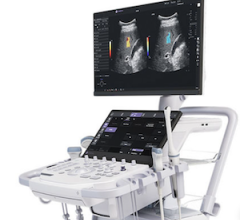
January 29, 2021 —Konica Minolta Healthcare Americas, Inc. announced an agreement with Medovate Ltd. to jointly promote Medovate’s SAFIRA regional anesthesia injection solution with Konica Minolta's range of solutions for ultrasound-guided procedures in the USA. SAFIRA (Safer Injection for Regional Anesthesia) is a new medical device designed to limit injection pressure and automatically stop injection at high pressures, helping to reduce the risk of nerve injury and improving patient safety. This initiative is the latest addition to Konica Minolta’s UGPro Solution, which brings together education, procedures and imaging equipment, such as the SONIMAGE HS2 Compact Ultrasound System, to further expand the use of regional anesthesia and enhance patient safety.
Regional anesthesia has demonstrated better post-operative analgesia, decreased opioid consumption and length of stay, early rehabilitation, fewer anesthesia-related side effects and high patient satisfaction compared to general anesthesia.1,2 A joint statement from the American Society of Regional Anesthesia and Pain Medicine (ASRA) and the European Society of Regional Anaesthesia and Pain Therapy (ESRA) recommend regional anesthesia over general anesthesia for COVID-19 patients where possible to reduce transmission of the virus.
“Regional anesthesia delivers numerous benefits for patients, physicians and hospitals, propelling its growth as an important alternative to general anesthesia,” said Eric Sumner, Executive Vice President Ultrasound Sales at Konica Minolta. “Medovate brings a unique combination of clinical innovation and expertise through its association with the United Kingdom’s National Health Service and we are proud to partner with them in this endeavor. Both Konica Minolta and Medovate are committed to promoting safer regional anesthesia with solutions that deliver clinical efficiency, simplify use and advance better outcomes for patients.”
The SONIMAGE HS2 System facilitates ultrasound-guided regional anesthesia procedures with an advanced algorithm, Simple Needle Visualization (SNV®), that improves needle visibility and increases accuracy in needle placement, both for in-plane and out-of-plane approaches. SNV also adjusts the sensitivity of needle visualization depending on the type of tissue.
“Delivering best practices in regional anesthesia by creating value through innovation is a common vision uniting Medovate and Konica Minolta,” said Chris Rogers, Sales and Marketing Director at Medovate. “As a leading ultrasound manufacturer, Konica Minolta is focused on helping physicians make informed decisions at the point-of-care to enhance patient safety, satisfaction and their clinical experience. We are honored to partner with them to advance the importance and safety of ultrasound guided techniques for regional anesthesia.”
In addition to helping limit injectate pressure, SAFIRA also transforms regional anesthesia into a one-physician procedure by allowing a single anesthesiologist to conduct the entire procedure. Previously, an assistant was required to inject the anesthetic solution at the required pressure while the anesthesiologist inserted the needle tip using ultrasound guidance. With SAFIRA, hospitals can reduce costs associated with staffing an additional assistant for these procedures as well as potentially reduce the time per procedure by up to five minutes.3
For more information: www.konicaminolta.com/medicalusa
References:
1. Cozowicz C, Poeran J, Zubizarreta N, et al. Trends in the Use of Regional Anesthesia: Neuraxial and Peripheral Nerve Blocks. Regional Anesthesia & Pain Medicine 2016;41:43-49.
2. Albrecht, E. and Chin, K.J. Advances in regional anaesthesia and acute pain management: a narrative review. Anaesthesia, 2020; 75: e101-e110.
3. Fong-Soe-Khioe R. Health Economic report Medovate commissioned written by a health economist from the University of East Anglia (UEA).
 October 19, 2026