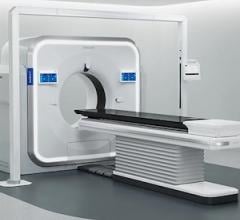
November 12, 2020 — GE Healthcare announced U.S. FDA 510(k) clearance of its SIGNA 7.0T magnetic resonance imaging (MRI) scanner. With a magnet approximately five times more powerful than most clinical systems, SIGNA 7.0T can image anatomy, function, metabolism and microvasculature in the brain and joints with incredible resolution and detail. This new system can be used for both research and clinical purposes to support a broad range of investigations across neurologic and musculoskeletal diseases.
With a powerful 7.0 tesla magnet at its core, SIGNA 7.0T combines a broad range of advanced technology, imaging methods, and years of GE Healthcare experience into a new imaging tool. The completely new SIGNA 7.0T features UltraG gradient technology, GE’s most powerful whole-body gradient coil, to meet the demands of ultra-high field imaging speed and resolution, advanced diffusion, and functional brain imaging.
This system also features GE’s latest SIGNAWorks software platform with state-of-the-art applications such as deep learning-based tools like AIR x brain for automated slice positioning and Silent MR imaging, enabling seamless protocol translation between GE MR systems. In addition, SIGNA 7.0T is equipped with Precision RF transmit and receive architecture to enable improved image quality and enable development in parallel transmit. This system also provides a unique platform for advanced knee and cartilage imaging, allowing for ultra-high-resolution anatomical visualization as well as research capabilities to measure quantitative changes in anatomy due to disease.
“We are thrilled to add SIGNA 7.0T to our portfolio,” said Jie Xue, president and CEO of GE Healthcare MR. “This new scanner is a critical tool in research for neurological disorders like Alzheimer’s disease and mild traumatic brain injury. Now clinicians will have access to the power of ultra-high field imaging combined with the ultra-high-performance gradients to translate research advances into new clinical diagnostic tools and potential treatment options.”
For more information: www.gehealthcare.com
Related 7T content:
FDA Clears First 7T MRI System, Magnetom Terra
 October 19, 2026