February 15, 2017 — Researchers from The Ottawa Hospital Breast Health Centre and the Ottawa Integrative Cancer Centre (OICC) have opened the Ottawa site of the Lead-In to the Tomosynthesis Mammographic Imaging Screening Trial (TMIST). The Breast Health Centre is one of three clinical trial sites to launch the Lead-In in Canada. It is expected that shortly this trial will be integrated into a larger U.S./Canada TMIST, managed by the ECOG-ACRIN Cooperative Clinical Trials Group.
TMIST is the first large randomized, multi-centre study to assess whether a novel 3-D digital tomosynthesis technology combined with 2-D digital mammography may be more effective at reducing the incidence of advanced breast cancers than conventional 2-D mammography alone. Previous smaller studies suggest that this new kind of mammography can increase breast cancer detection and reduce the rate of false positives and recalls for women who do not have cancer. If successful, implementation of this technology would provide greater assurance of an effective test, reduce patient stress and anxiety, and ultimately reduce costs to the healthcare system. The current Lead-In study aims to enroll 6,300 women in Canada, including 2,000 from Ottawa. Women attending mammographic screening at the Breast Health Centre may be approached to participate.
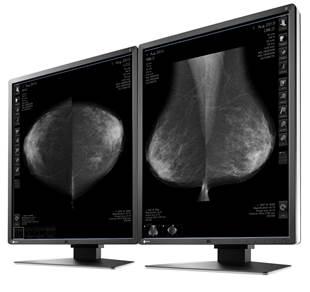
Digital breast tomosynthesis uses multiple low-dose images of the breast that are layered into a pseudo 3-D view instead of the traditional 2-D views. As information is not superimposed, tomosynthesis creates a richer and clearer image that may help avoid missing cancers that may be hidden in surrounding breast tissue.
"Tomosynthesis is the most advanced and exciting technology for mammography," said Jean Seely, M.D., head of breast imaging at the Breast Health Centre, associate professor at the University of Ottawa and lead investigator of TMIST Lead-In in Ottawa. "When the full study begins, it will be the largest and most important study to evaluate both 3-D and 2-D mammography technology together. Outcomes of the study will allow us to decide how we move forward from 2-D to 3-D screening. Our goal is to improve on ways to detect important cancers as early as possible in order to save lives."
"We are pleased to collaborate and help fund this critical trial," said Dugald Seely, naturopathic doctor, executive director of the OICC, and co-investigator of TMIST in Ottawa. "Imaging and mammography are stressful events. The OICC is committed to supporting women so that they receive the best diagnostic technology, limiting unnecessary anxiety and ultimately reducing the burden of disease. The screening program is potentially revolutionary and we hope will be more accurate in correctly finding breast cancers that may not otherwise be diagnosed."
Breast cancer is the leading cause of death amongst women between 40 and 50 years of age. At The Ottawa Hospital there are 1,000 new cases of breast cancer diagnosed per year.
Screening mammography has been shown to reduce the mortality of breast cancer. Specifically, women with breast cancer who underwent prior screening had a death rate of approximately 6 percent after five years, compared to 15 percent for people who did not undergo screening. Despite this fact, there is extensive controversy surrounding screening. The harms of high numbers of false positives from 2-D mammography have called screening into question. For every 100 women who are recalled for additional testing, more than 90 will have a normal finding or benign disease. This high number of initial false positives creates stress for women and may lead to decreased screening use, with a potential greater loss of lives from undetected cancer. It is hoped that tomosynthesis technology will reduce false positives, improve sensitivity and overall accuracy of digital mammograms.
The full TMIST study of 165,000 women will be led by Etta Pisano, M.D., dean emerita, College of Medicine, Medical University of South Carolina and current vice-chair of research in the Department of Radiology at Beth Israel Deaconess Medical Center, Harvard University. The Canadian Lead-in study is being led by Martin Yaffe, Ph.D., senior scientist, imaging research, Sunnybrook Research Institute, professor of Depts. Medical Biophysics and Medical Imaging, at University of Toronto.
This study has been approved by the Ottawa Health Science Network Research Ethics Board.
For more information: www.canadiancancertrials.ca

 October 19, 2026