June 22, 2016 — Non-small cell lung cancers (NSCLC) have a collective reputation for not responding very well to chemotherapy. Researchers at the 2016 Annual Meeting of the Society of Nuclear Medicine and Molecular Imaging (SNMMI), June 11-15 in San Diego, presented a means of evaluating an immunotherapy that fights off NSCLC by strengthening a patient’s own immune system.
NSCLC accounts for as much as 85 percent of all lung cancers. Due to NSCLC’s relative insensitivity to chemotherapy, researchers have been increasing the use of immunotherapies, including a class of monoclonal antibodies that serve as immune checkpoint blockade inhibitors. Essentially, these drugs stop malignant tumor cells from hijacking aspects of the immune system that keep cancer cells from proliferating out of control. Here, researchers investigated a relatively new drug called atezolizumab, which inhibits activity between the programmed death 1 (PD-1) receptor expressed on certain immune cells — most notably killer T cells — and the programmed death-ligand 1 (PD-L1), a transmembrane protein found on the surface of tumor cells. Cancer and other antigen-bearing cells wield this protein to bind with and deactivate cancer-specific T cells and effectively suppress immune response to malignant cells.
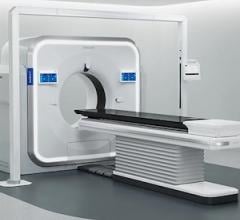
Researchers tracked the ability of atezolizumab to bolster immunity against NSCLC with positron emission tomography (PET), which provides a visualization of physiological functions of the body with the aid of an injected imaging agent combining a tiny amount of radioactive material and a molecular compound called fluorine-18 fluorodeoxyglucose (F-18 FDG). This radiotracer mimics glucose as it is taken up as fuel by the body. FDG-PET allows clinicians to see areas of increased metabolic activity in cells, also known as hypermetabolism, a hallmark of malignant tissues, and change in metabolic activity following drug treatment.
“This study is the first to prospectively evaluate FDG-PET imaging in a phase II trial of lung cancer patients receiving the novel immune checkpoint inhibitor atezolizumab,” said Jill Fredrickson, Ph.D., a clinical imaging scientist in the Department of Early Clinical Development at Genentech in San Francisco, Calif. “These findings help define the potential role of FDG-PET as a prognostic and predictive biomarker in the treatment of lung cancer with such immuno-therapeutics.”
This multi-center study included a total of 138 patients with NSCLC from 28 clinical institutions in five different countries. All subjects received 1,200 mg of atezolizumab administered intravenously in three-week intervals. Researchers used quantitative PET that measured FDG retention as a sign of metabolic activity, both at baseline before study treatment, and again after six weeks of treatment with atezolizumab.
The study revealed that higher baseline tumor volumes of FDG were predictive of reduced patient survival, meaning that greater active tumor volume at the start of therapy was a sign of lower survival. In addition, a further increase in tumor volume at six weeks was a sign of decreased patient survival. Although atezolizumab and other immune checkpoint inhibitors work differently than conventional chemotherapy, FDG-PET may be used with either treatment to help doctors evaluate how NSCLC patients may respond to therapy.
For more information: www.snmmi.org

 October 08, 2026