March 8, 2011 – RaySearch Laboratories has entered into an exclusive license agreement with Princess Margaret Hospital (PMH) in Toronto, Canada, regarding deformable image registration technology. RaySearch and PMH have a long-standing research collaboration focused on strategies and tools for adaptive radiation therapy.
The new agreement, licensed through the Technology Development and Commercialization Office at University Health Network, gives RaySearch the right to integrate algorithms from PMH’s research software Morfeus into the company’s RayStation treatment planning system.
Morfeus contains a set of algorithms for deformable image registration based on biomechanical modeling of anatomical structures. This makes it possible to track how the radiation dose is delivered to the patient taking into account changes occurring in the patient’s anatomy over the course of treatment. This information can be used to further refine the treatment, which has the potential to increase tumor control, as well as reduce the risk for side effects.
The advanced biomechanical modeling in Morfeus incorporates not only the material properties of various anatomical structures, but also how they interact and affect each other. Examples include the sliding interface between the lung and the chest, and structural impact of bronchial tree in the lungs. The PMH team has developed it over the last seven years, and they have thoroughly validated the accuracy of the algorithms along the way. The development and extensive validation has been documented in several publications in renowned scientific journals. A first version is expected to be released later in 2011 as a part of the company’s treatment planning system RayStation.
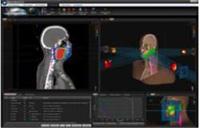
RayStation integrates the company’s advanced treatment planning solutions into a flexible system. It combines features such as multi-criteria optimization tools with full support for 4-D adaptive radiation therapy. It also includes functionality, such as algorithms for intensity-modulated radiation therapy (IMRT) and volumetric modulated arc therapy (VMAT) optimization, and highly accurate dose engines for both photon and proton therapy. The system is built on the latest software architecture and has a graphical user interface offering state-of-the-art usability.
For more information: www.raysearchlabs.com

 October 23, 2026