August 6, 2018 — The world market for machine learning in medical imaging is set for a period of robust growth and is forecast to top $2 billion by 2023, according to a new report from Signify Research. The artificial intelligence (AI) market comprises software for automated detection, quantification, decision support and diagnosis according to Signify Research, an independent supplier of market intelligence and consultancy to the global healthcare technology industry.
Despite some of the earlier market hype, the report states it is becoming increasingly clear that AI will transform the diagnostic imaging industry, both in terms of enhanced productivity, increased diagnostic accuracy, more personalised treatment planning, and ultimately, improved clinical outcomes. AI will play a key role in enabling radiology departments to cope with the ever-increasing volume of diagnostic imaging procedures, despite the chronic shortage of radiologists in many countries.
Following the introduction of deep learning technology and affordable cloud computing, graphics processing units and storage, the pace of product development for AI-based medical image analysis tools is faster than ever before, Signify Research said. Not only is this leading to increased product availability from a wider selection of vendors, but AI-based tools are gradually becoming more accurate and sophisticated with added functionalities.
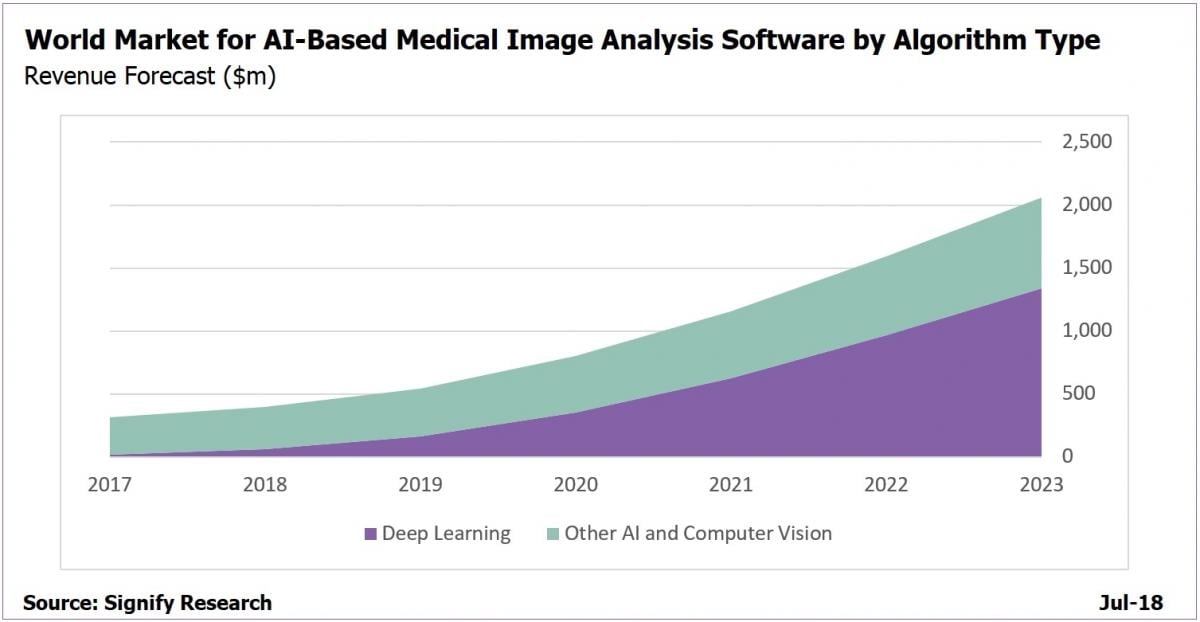
The report notes that the interest and enthusiasm for AI in the radiologist community has notably increased over the last 12 to 18 months, and the discussion has moved on from AI as a threat, to how AI will augment radiologists. At the same time, there are emerging clinical applications where the use of AI has been shown to both improve clinical outcomes and deliver a return on investment for healthcare providers. Examples include software to detect and diagnose stroke, and analysis tools to measure blood flow in non-invasive coronary exams.
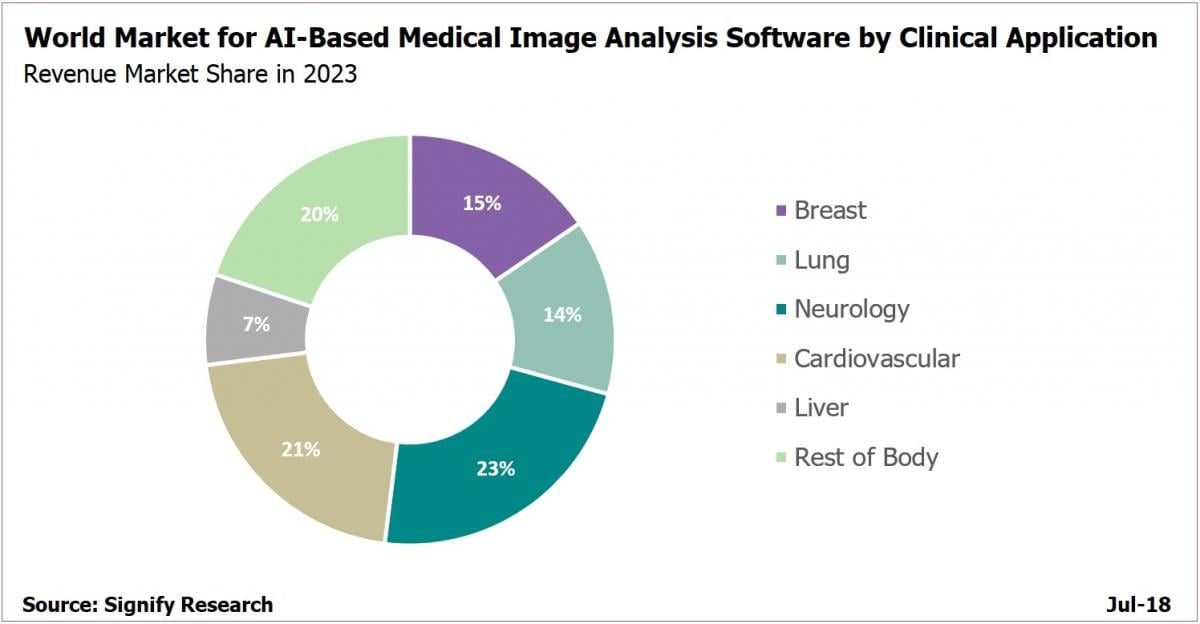
While the market holds great promise, it is still in the innovator and early adopter phase and there are several barriers to growth that need to be overcome before AI becomes mainstream in medical imaging, according to the report:
-
The regulatory process remains challenging and there are few approved and fully commercialized products on the market, particularly deep learning-based products;
-
More large-scale validation studies are needed to show the performance of deep learning algorithms in real-world clinical settings and boost radiologist confidence in AI;
-
The results from AI-based image analysis tools need to be fully integrated into radiologists’ workflows and presented at the time of the primary read. Algorithm developers need to partner with imaging information technology (IT) vendors to ensure their solutions are tightly integrated; and
-
Healthcare providers are reluctant to purchase AI tools from multiple software developers due to the vendor specific integration and implementation challenges and the administrative overhead. Algorithm developers need to establish effective routes to market, such as distribution deals with the established medical imaging vendors and the new breed of vendor-neutral AI platforms.
Up to now, the market has mainly been driven by the many start-ups and specialist software developers who are applying machine learning to medical imaging. The report notes, however, that major medical imaging vendors are now ramping up their AI activities. In the last year or so, Signify Research has also seen several of the world’s technology giants apply their AI expertise to medical imaging, most notably China’s Tencent and Alibaba. Over the coming years, the company says the combined research and development (R&D) firepower of the expanding ecosystem will knock down the remaining barriers, and radiologists will have a rapidly expanding array of AI-powered workflow and diagnostic tools at their disposal.
“Machine Learning in Medical Imaging – 2018 Edition” provides a data-centric and global outlook on the current and projected uptake of machine learning in medical imaging. The report blends primary data collected from in-depth interviews with healthcare professionals and technology vendors, to provide a balanced and objective view of the market.
Download the full report here.
For more information: www.signifyresearch.net

 October 13, 2026