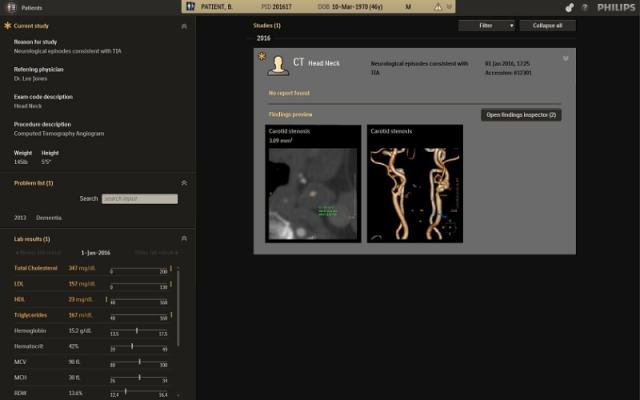
February 24, 2017 — Frost & Sullivan’s TechVision Growth Partnership Service program released a new report, “Artificial Intelligence (AI) – R&D and Applications Roadmap” detailing the potential future growth of AI across several industries, including healthcare.
The concerted efforts toward making artificial intelligence (AI) technology capable of human-like cognitive behavior such as learning, reasoning, problem solving, planning and self-correction have received a huge boost with advances in deep learning and neural networks, according to Frost & Sullivan. The technological complexities inherent in developing perceptions for machines, as well as the verification and validation of these tools, have been eased to a large extent by the advancements of AI technology. These developments will open up a plethora of opportunities for AI in smart applications that can make critical decisions autonomously and accurately, without human intervention.
“With brain computer interface (BCI), AI can power future machines to understand human thoughts and emotions, even without physical or vocal communication,” noted Frost & Sullivan TechVision Senior Research Analyst Debarun Guha Thakurta. “Instead of simply mimicking the human brain structurally, AI will be able to impart human-like intelligence to machines.”
Leveraging convergent ideas with technologies, AI can open up new horizons in groundbreaking applications. Moving beyond syntactical understanding of human words, future applications will understand the semantics hidden in human language, and observe, understand and detect objects accurately in their surroundings, making them more responsive. Additionally, the study explores the roadblocks to technology implementation.
AI has complex hardware and software infrastructural requirements, as the intelligent algorithms require exceptional processing capabilities to process large data sets in real time. Innovators, with incremental technology evolution, are successfully meeting these needs, according to the report. Innovations in natural language processing, robotics, cybersecurity and computer vision will spawn novel applications that transform the way humans interact with smart devices.
Academia and corporations all over the world are conducting extensive research to make AI more intelligent. The United States is responsible for almost 35 percent of the patents in AI, according to Frost & Sullivan, followed by China, World Intellectual Property Organization (WIPO), Japan, Europe and South Korea.
“AI is being widely used across sectors like healthcare, automotive, banking and finance, and aerospace and defense due to its ability to understand patterns in data and make highly accurate predictions and simulations,” noted Thakurta. “In due course, it will be an integral component powering future cognitive computing systems that have processing power and intelligence similar to human beings.”
For more information: www.frost.com
 October 19, 2026