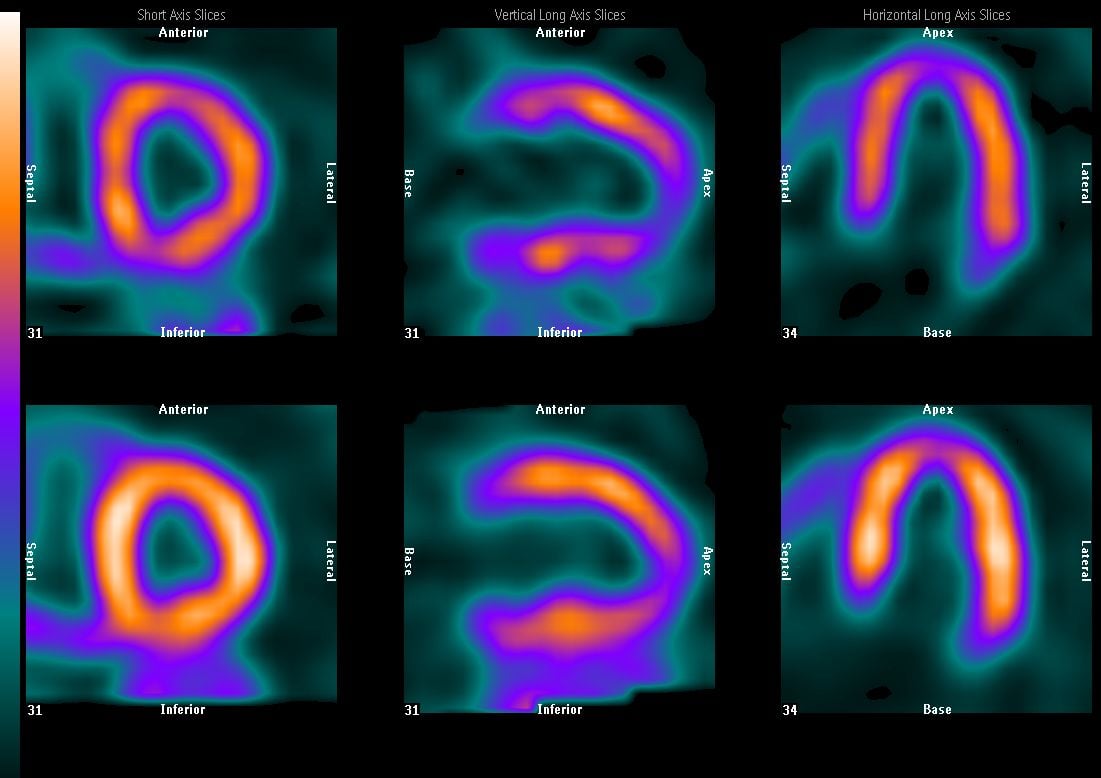
April 27, 2012 — More than 150 molecular imaging professionals gathered last week at the Society of Nuclear Medicine’s third Multimodality Cardiovascular Molecular Imaging Symposium held at the National Institutes of Health. The two and a half day symposium brought together individuals from multiple scientific disciplines — including chemistry, engineering, physics, molecular biology, cardiovascular physiology and imaging sciences — with the goal of promoting the emerging field of cardiovascular molecular imaging.
“Our program this year focused on advances in targeted imaging of the cardiovascular system including imaging of cardiovascular receptors, stem cell therapy, vascular biology, myocardial metabolism and other relevant biological processes,” said Albert J. Sinusas, M.D., program chair of the symposium. “The symposium proved to be very successful, stimulating further interest in the field and advancing the promotion of basic science research and the development of clinical applications in cardiovascular molecular imaging.”
The first day of the symposium highlighted the development and application of novel imaging probes for evaluation and treatment of cardiovascular disease, along with novel hybrid imaging technology. The imaging technologies reviewed included; fluorescence imaging, chemical exchange saturation contrast imaging, optoacoustic imaging, multispectral CT as well as microSPECT and microPET imaging. Professor Jason S. Lewis, Ph.D., vice chair of radiology and chief attending of the radiochemistry and imaging sciences service in the Department of Radiology at Memorial Hospital for Cancer and Allied Diseases, in New York City, presented a keynote address on molecular imaging agents that are currently in translation for imaging cancer.
Lewis noted, “Now is a particularly interesting time for the field of cardiology. We have multiple new agents coming down the pipeline in the oncology world that can be used in various imaging capacities; there are hopefully a lot of interesting parallels and lessons to be learnt in the nuclear cardiology field based on our experience with cancer. Having these new targeted imaging options allows us to personalize medicine to make sure that the patient is getting the most appropriate test for their indication.”
Attendees switched their focus to specific diseases on day two of the symposium and learned about imaging of atherosclerosis and vascular remodeling, imaging angiogenesis and arteriogenesis, metabolic imaging of the heart, imaging of myocardial injury, repair and remodeling. Ira Tabas, M.D., Ph.D., provided another keynote lecture on the pathophysiology of atherosclerosis, and the associated implications for targeted imaging of the vasculature. The symposium concluded with sessions on stem cell therapy and challenges of translation of molecular imaging and therapy, with a third keynote lecture by Lee Josephson, Ph.D.
In addition to scientific program, a total of 22 abstracts representing the most novel ideas in molecular imaging research as applied to the cardiovascular system, were accepted for the symposium’s poster session. The winning abstract for the symposium was “Quantitative first-pass perfusion MRI of the mouse heart: data acquisition, reconstruction, and analysis strategies,” authored by N.K. Naresh. The first runner-up was “Therapeutic efficacy of different liposomal glucocorticoids as a treatment for atherosclerosis assessed by multimodal imaging,” authored by M.E. Lobatto.
For more information: www.snm.org/cmiit

 October 07, 2026