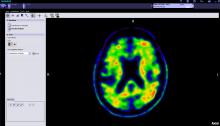
Positron emission tomography (PET) is a nuclear imaging technology (also referred to as molecular imaging) that enables visualization of metabolic processes in the body. The basics of PET imaging is that the technique detects pairs of gamma rays emitted indirectly by a positron-emitting radionuclide (also called radiopharmaceuticals, radionuclides or radiotracer). The tracer is injected into a vein on a biologically active molecule, usually a sugar that is used for cellular energy.


Artec 3D, a developer and manufacturer of professional 3-D hardware and software, announced the release of Artec Studio 11.

June 2, 2016 — Physicians have long used magnetic resonance imaging (MRI) to detect cancer, but a new study describes the potential use of restriction spectrum imaging (RSI) as an imaging biomarker for prostate cancer.

University Hospitals in Cleveland recently held a ceremony to mark the completion of its new $30 million proton therapy center, the first in the state of Ohio.

June 2, 2016 — Lexmark International announced the availability of several new and enhanced enterprise imaging and enterprise content management (ECM) offerings. All offerings are designed to help healthcare delivery organizations (HDOs) consolidate health data and images, streamline clinical workflows and complete the patient record.

June 2, 2016 — VirtaMed introduced the ArthroS Hip Module at the EFORT Congress in Geneva, Switzerland, June 1-3. The module is designed to provide safe access training for arthroscopic hip procedures. This includes portal placement, fluoroscopic imaging, diagnostic tours and therapeutic cases, all wrapped in a combination of an extremely realistic anatomic model and a high-fidelity virtual reality environment.

Subscribe Now